Why Are Japanese Beds on the Floor?
 0
0
 0
0
Walk into a traditional Japanese home and you will notice something missing: the bed frame. Instead of a mattress propped up on legs, you will find a thin, foldable mattress laid directly on tatami mats. This setup looks strange to anyone raised on box springs and headboards, but it is the product of centuries of practical thinking about space, climate, and daily life.
I got curious about this after a friend switched to a floor bed and swore his back pain disappeared. That sent me down a rabbit hole of research into Japanese sleep culture, and what I found is a system that makes a lot of sense once you understand the reasoning behind it. Here is the full picture.
The Futon Is Not What You Think It Is
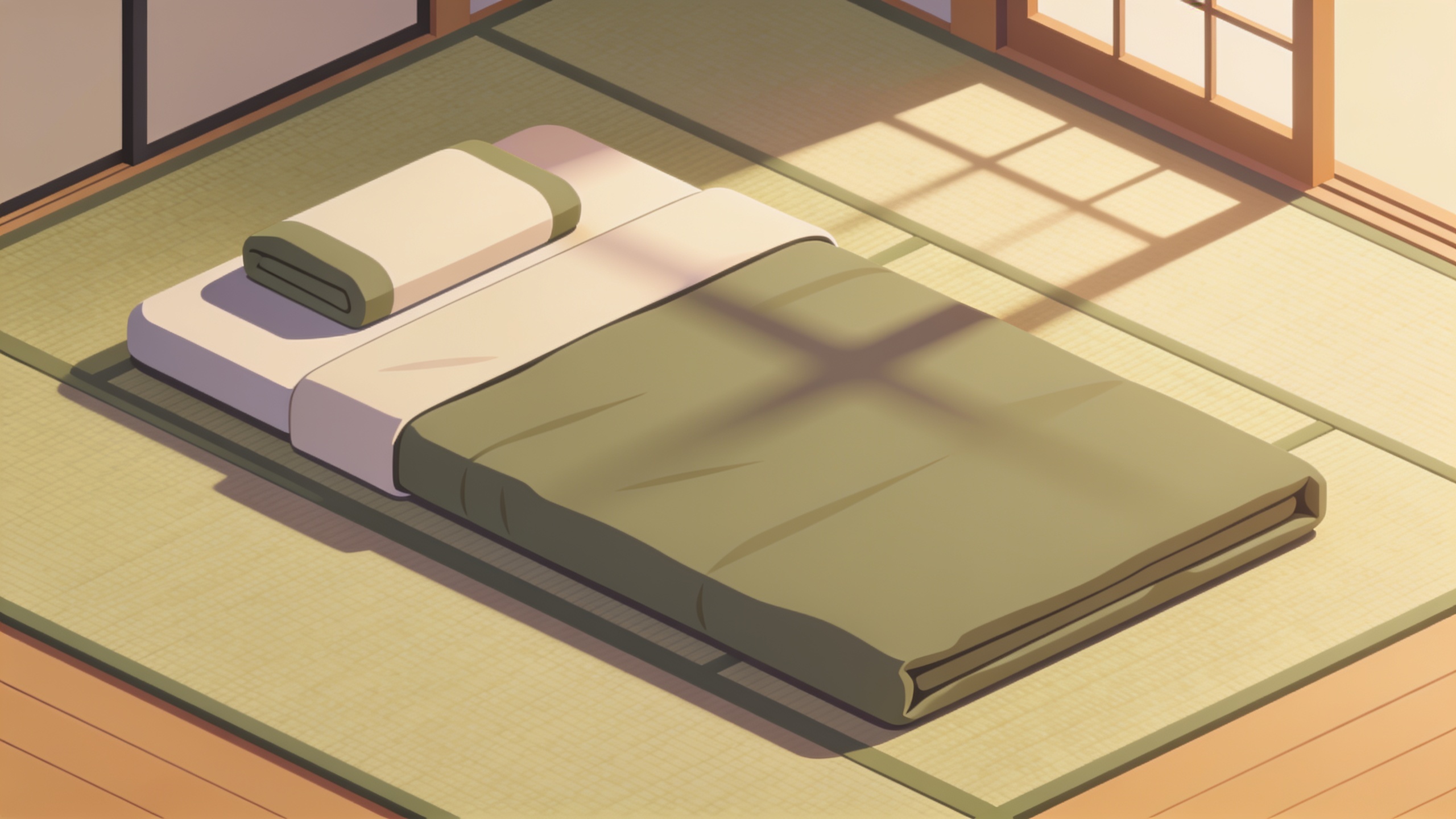
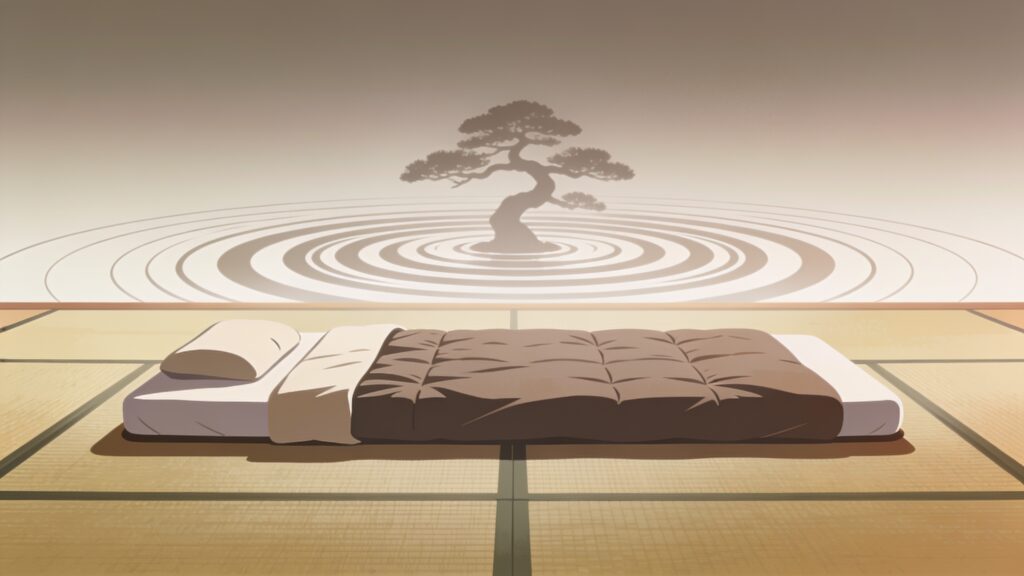
In the US, “futon” usually means a couch that folds out into a lumpy guest bed. That is a marketing distortion. The real Japanese futon is a two-part sleep system made of a shikibuton (the mattress you lie on) and a kakebuton (the comforter on top).
The shikibuton is thin, dense, and firm, usually stuffed with cotton or a cotton-polyester blend. It has zero resemblance to the springy Western mattress. Its whole job is to cushion the body against a hard floor without swallowing it in foam.
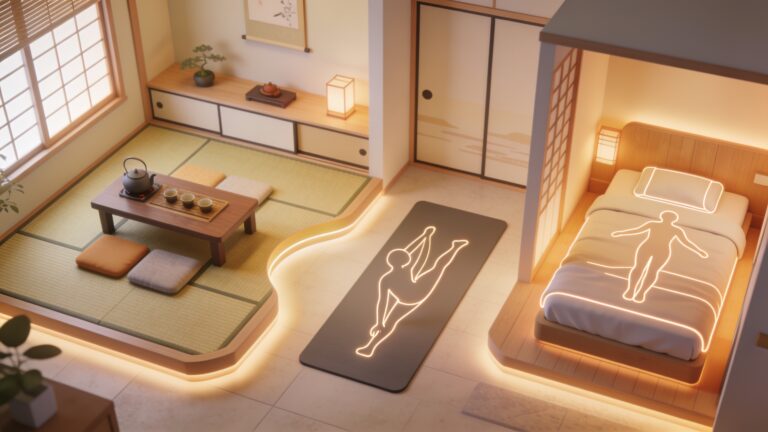
Every morning, the futon gets folded up and stored in a closet called an oshiire. The room that was a bedroom at midnight becomes an open living space by 8 a.m. This flexibility is central to why floor sleeping caught on and stuck around.
Small Homes Demand Flexible Rooms
Japan’s cities are dense, and living space has been tight for a long time. Tokyo apartments regularly run smaller than 500 square feet, and even family homes in the suburbs prioritize efficient use of every room.
A dedicated bedroom with a permanent bed frame is a luxury many households cannot spare. A room that serves as a bedroom at night and a dining or study space during the day effectively doubles the usable square footage of a home.
- A single room can function as a bedroom, living room, and guest space depending on the time of day.
- Futons store flat in closets, unlike bed frames and box springs that occupy permanent floor space.
- Multiple futons can be pulled out for guests without needing extra bedrooms.
- Moving between apartments is far easier without heavy furniture to haul.
This adaptability is not a workaround born of necessity alone. Japanese homes were designed around this flexibility long before urban crowding made it essential, which brings us to the deeper cultural roots.
Tatami Culture and the Architecture of the Floor
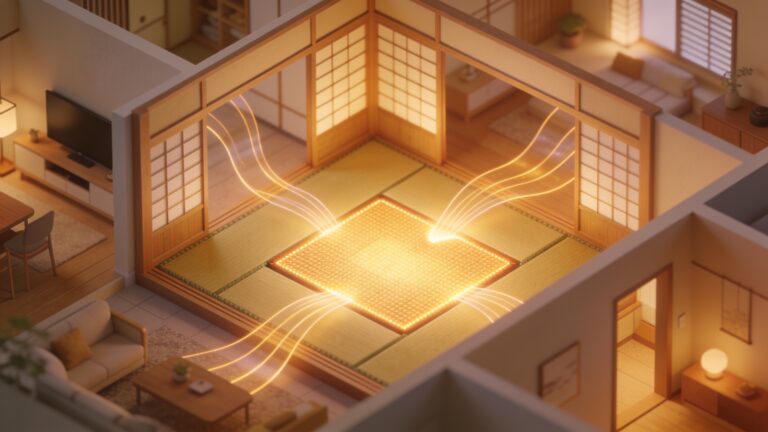
Traditional Japanese rooms are built around tatami, woven straw mats that have been a fixture of Japanese interiors since the Heian period over a thousand years ago. Tatami is not just flooring, it is the unit that defines room size and function in classical Japanese architecture.
Sitting, eating, and sleeping on tatami is part of a broader design philosophy where furniture stays low and the floor itself is treated as clean, livable space. Shoes come off at the entrance specifically to preserve this cleanliness. Once you accept the floor as a legitimate living surface, sleeping on it is a small step, not a strange one.
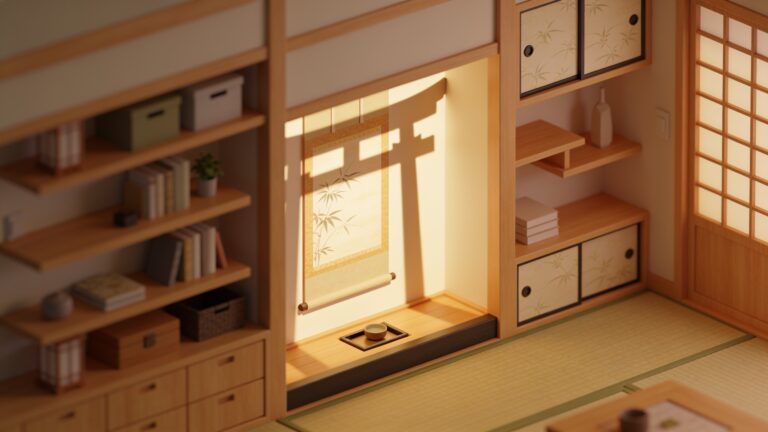
Low furniture throughout the home reflects the same logic. Low tables, floor cushions called zabuton, and futons all share a design language that keeps the room’s visual weight close to the ground. A bed frame breaks that harmony and eats into the open, multipurpose feel that tatami rooms are built for.
Climate and Comfort Considerations
Japan’s climate varies dramatically from north to south, but much of the country deals with hot, humid summers. Sleeping close to the floor, especially on breathable tatami, keeps you cooler than sleeping on an elevated mattress that traps heat in its frame and box spring.
Futons are also lightweight and easy to air out. Most Japanese households hang their futons over a balcony railing or a special stand a few times a week to release moisture and prevent mold and dust mites from building up. Try doing that with a queen-size innerspring mattress.
| Factor | Floor Futon | Western Bed Frame |
|---|---|---|
| Room flexibility | High, room converts for other uses | Low, bedroom stays a bedroom |
| Storage | Folds away in a closet | Permanent floor footprint |
| Airflow and moisture control | Easy to air out regularly | Difficult, mattress stays put |
| Initial cost | Generally lower | Generally higher |
| Long-term firmness | Consistent if maintained | Can sag over years |
| Ease of moving homes | Simple, lightweight | Heavy, often requires help |
The Health Angle: Firmness and Posture
Beyond culture and climate, there is a genuine physical argument for sleeping low and firm. A shikibuton on tatami offers a much firmer surface than most memory foam or pillow-top mattresses sold in the West. Firmer sleep surfaces are often recommended for people with lower back issues because they keep the spine in a more neutral position rather than letting the hips sink.
This does not mean floor sleeping is right for everyone. People with mobility issues, joint pain, or certain hip conditions may find it harder to get up from a floor-level bed compared to a raised one. It is a genuine tradeoff, not a universal fix, and that nuance gets lost whenever this topic goes viral online with claims that floor sleeping cures back pain for everyone.
Ritual, Discipline, and Everyday Mindfulness
There is also a quieter, less practical reason this custom has endured. Folding your futon every morning is a small daily ritual, similar in spirit to making your bed in the West but more physically involved. It requires you to interact with your sleeping space intentionally rather than just walking past an unmade bed.
This ties into a broader thread in Japanese domestic life where simplicity and order in the home are treated as connected to discipline and calm in daily routine. The futon system is not just efficient. It asks something small of you every single day, and plenty of people who have adopted it say that small daily task adds structure to their morning.
Key Takeaways
Japanese floor beds are not a relic or a compromise. They are the product of deliberate choices around small living spaces, tatami architecture, humid climates, and a cultural comfort with using the floor as legitimate living space. The futon system trades the permanence of a Western bed frame for flexibility, airflow, and a firmer sleep surface, with a small daily ritual built in.
If you are curious about trying it yourself, start small. Pick up a quality shikibuton, place it on a firm surface, and commit to airing it out weekly. Give it two weeks before judging how your back feels. You might find that ditching the bed frame gives you more than just extra floor space.