Traditional Japanese Bedroom Styles for Minimalists
 0
0
 0
0
I’ve spent years redesigning small living spaces, and nothing solves the clutter problem quite like a traditional Japanese bedroom. This isn’t a trend borrowed from a design magazine. It’s a centuries-old approach built on restraint, natural materials, and the idea that a room works best when it holds only what it needs.
If you’re drawn to minimalism but tired of the cold, sterile version that shows up on most “minimalist bedroom” boards, Japanese design offers something warmer. It pairs simplicity with texture, wood, and quiet ritual. Here’s how to bring that into your own space without turning it into a theme park version of a ryokan.
Why Japanese Design and Minimalism Fit Together Naturally
Japanese interior design grew out of practical constraints. Homes were small, earthquakes were common, and rooms needed to serve multiple purposes throughout the day. That pressure produced a design language built around flexibility and negative space, known as “ma.”
Minimalists today face different pressures, but the goals overlap. Both philosophies value fewer objects, more intention, and rooms that breathe. A traditional Japanese bedroom achieves calm not by stripping everything away, but by choosing each element with purpose.
The Concept of Ma (Negative Space)
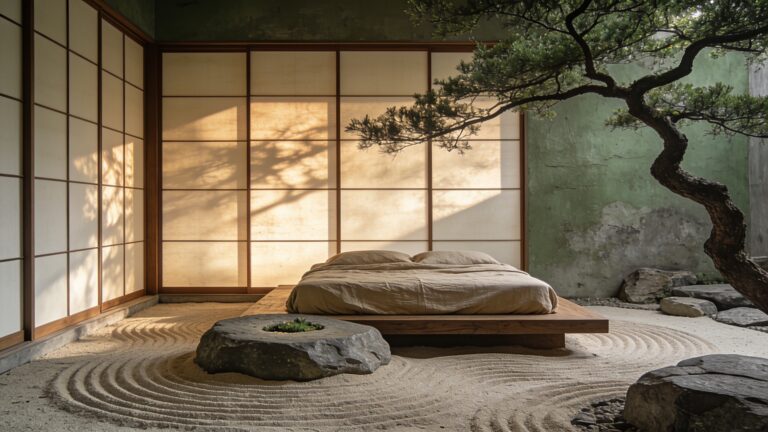
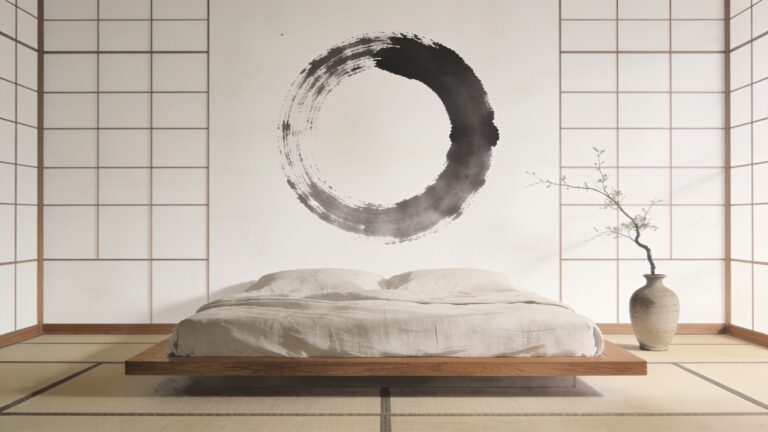
Ma refers to the meaningful emptiness between objects. In a Japanese bedroom, the open floor space around your futon or low bed isn’t wasted room. It’s part of the design.
Western minimalism often treats empty space as the absence of clutter. Japanese design treats it as an active ingredient, something that gives the eye room to rest and the body room to move. Once you start thinking this way, you stop asking “what can I remove” and start asking “what does this space need to feel right.”
Core Elements of a Traditional Japanese Bedroom
Every traditional Japanese bedroom shares a handful of structural elements. You don’t need all of them to capture the feeling, but understanding each one helps you make smarter substitutions.
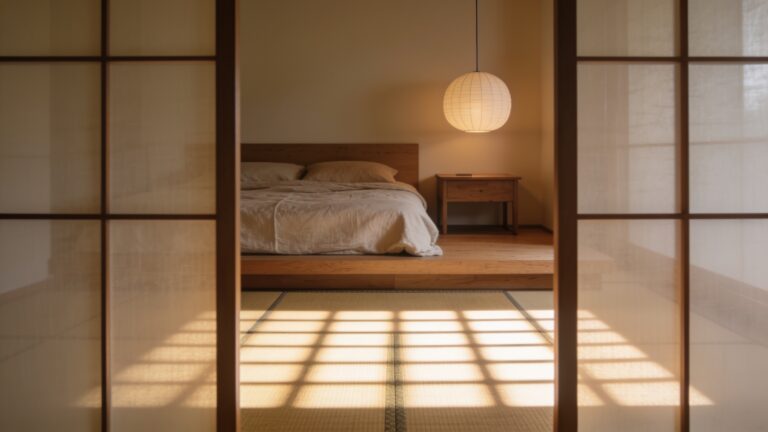
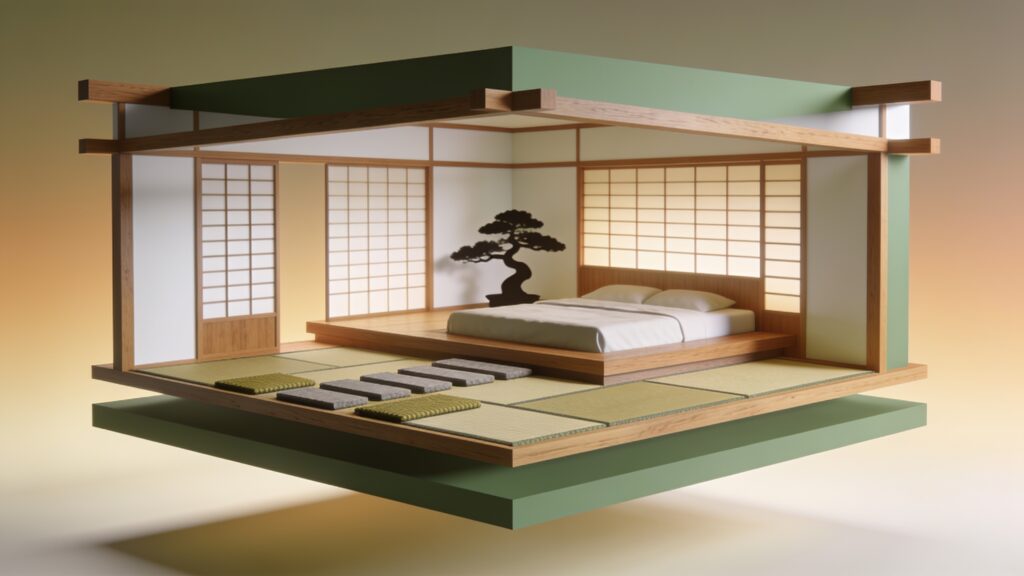
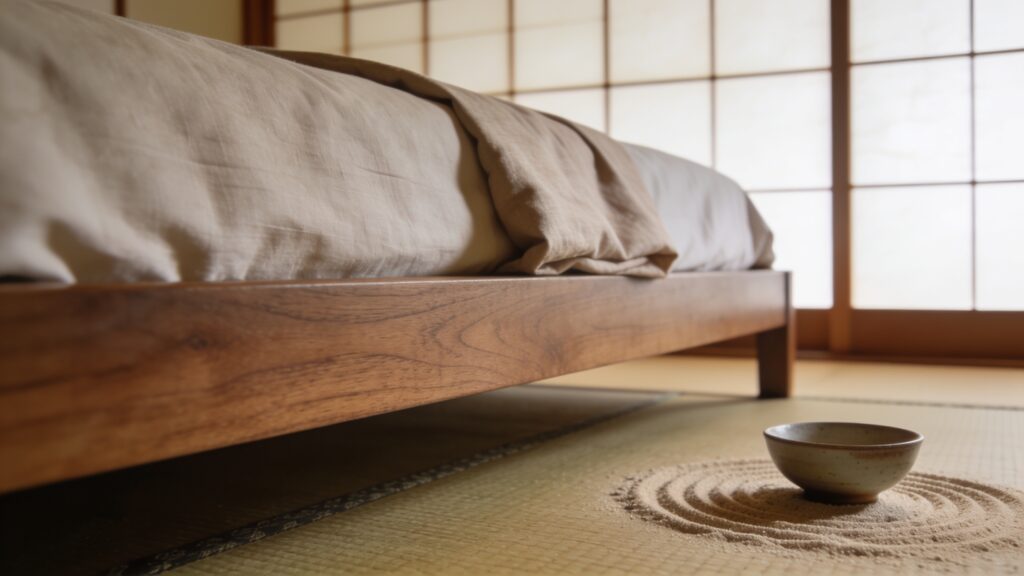
- Tatami mats: Woven straw flooring that defines room proportions and adds a faint, grassy scent.
- Futon bedding: A thin, foldable mattress stored away during the day, not the thick Western “futon couch.”
- Shoji screens: Translucent paper panels in wooden frames, used for doors, windows, or room dividers.
- Low furniture: Beds, tables, and shelves sit close to the floor, lowering the visual weight of the room.
- Natural materials: Wood, paper, bamboo, and cotton dominate, with almost no plastic or synthetic finish.
- Tokonoma alcove: A small recessed space for a single decorative object, like a scroll or ikebana arrangement.
None of these elements exist purely for decoration. Tatami regulates humidity. Futons free up floor space during the day. Shoji screens filter light without blocking it entirely. Everything earns its place.
Tatami: The Foundation of the Room
Tatami mats are measured in a standard unit, and room sizes in Japan are still described by how many mats fit inside them, like a “six-mat room.” That standardization made design decisions simpler for centuries, and it can do the same for you.
If installing real tatami isn’t realistic in your home, tatami-style area rugs or interlocking foam tiles with a woven top layer get you close. The goal is a firm, slightly textured surface that reads as natural rather than synthetic.
Futons Instead of Bed Frames
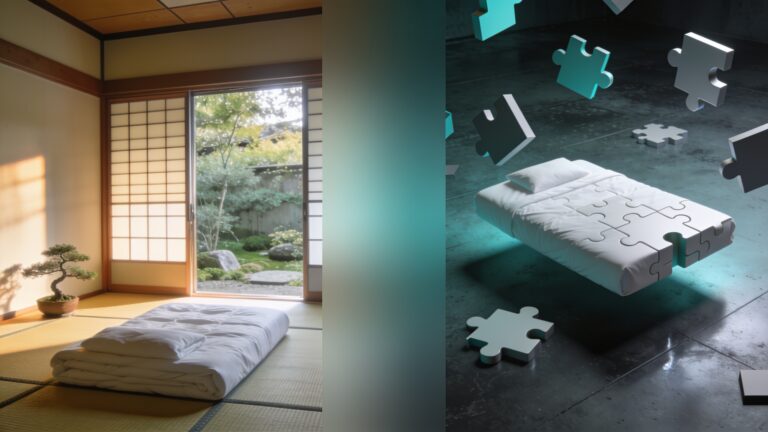
A traditional futon sits directly on the tatami and gets folded and stored in a closet, called an oshiire, each morning. This single habit does more for a minimalist bedroom than any storage hack I’ve recommended in twenty years of writing about small spaces. When the bed disappears, the room becomes something else entirely, a place to stretch, read, or just sit on the floor.
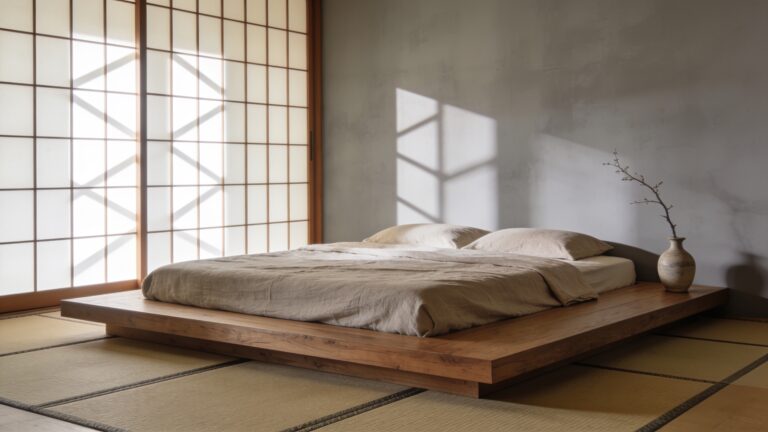
If a full futon setup feels impractical, a low platform bed with a slim mattress captures most of the visual effect. Keep the frame under 12 inches high and skip the headboard.
Choosing a Style Within the Tradition
Japanese bedroom design isn’t a single fixed look. Different eras and regions produced distinct variations, and picking one gives your room more coherence than mixing elements at random.
| Style | Key Features | Best For |
|---|---|---|
| Zen / Minka | Bare wood, minimal decor, tatami, one tokonoma alcove | True minimalists who want maximum restraint |
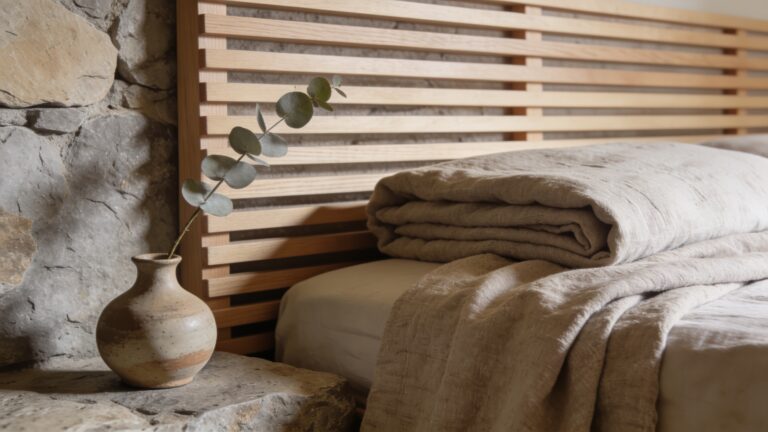
| Wabi-sabi | Imperfect textures, aged wood, handmade ceramics | Those who want warmth over precision |
| Modern Japandi | Japanese materials with Scandinavian furniture lines | Renters or apartment dwellers needing flexibility |
| Ryokan-inspired | Layered textiles, soft lighting, low tables | People who want a “retreat” feeling at home |
I lean toward wabi-sabi for most clients because it forgives imperfection. A minka-style room demands precision that’s hard to maintain in a busy household. Wabi-sabi lets a slightly uneven wooden shelf or a hand-thrown ceramic lamp base add character instead of looking like a mistake.
Color, Light, and Materials
Traditional Japanese bedrooms lean on a narrow, calm palette. Think unbleached cotton, pale wood, charcoal grey, and deep indigo, used sparingly against neutral backgrounds. Bright, saturated color shows up rarely, and only in small doses like a single cushion or a piece of pottery.
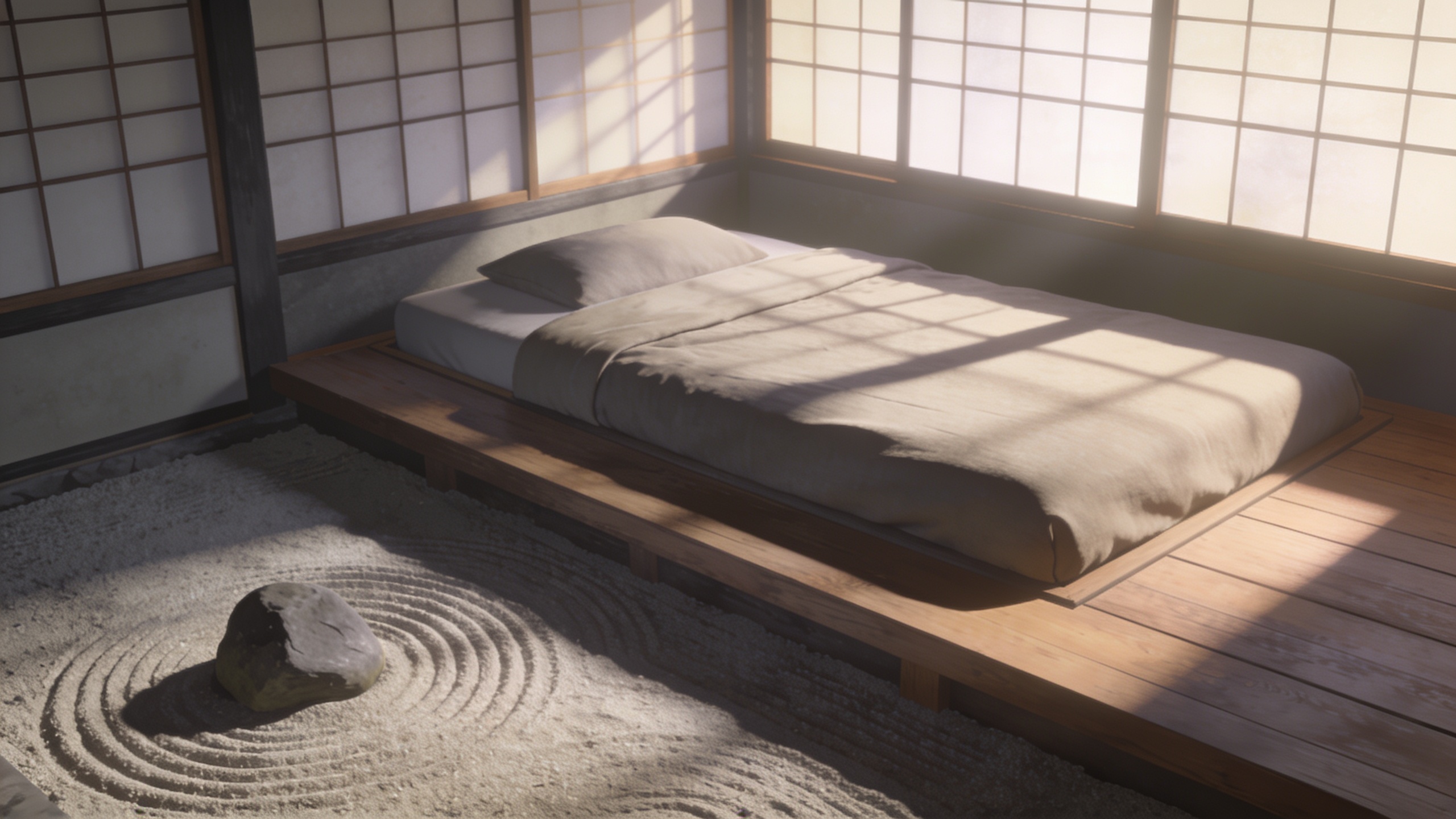
Lighting matters as much as color. Shoji screens diffuse daylight into a soft, even glow rather than harsh direct rays. At night, low lighting from paper lanterns or floor-level lamps keeps the room from feeling clinical the way overhead LED lighting often does.
Practical Material Swaps
- Replace synthetic curtains with linen or cotton panels in cream or grey.
- Swap a metal bed frame for a low wooden platform, ideally in unfinished or lightly oiled cedar or oak.
- Use paper or bamboo pendant lamps instead of glass or metal fixtures.
- Choose ceramic or stoneware for any decorative objects instead of plastic or resin.
Storage and the Discipline of Fewer Objects
A traditional Japanese bedroom has almost no visible storage. Clothes, bedding, and personal items live behind sliding doors or in built-in closets like the oshiire. This isn’t about owning fewer things necessarily, though that helps. It’s about keeping daily-use objects out of sight so the room itself stays visually quiet.
If your bedroom has a standard closet, add sliding doors or simple curtains to hide the contents completely. A single low dresser in matching wood tone works better than several small storage pieces scattered around the room.
Bringing It Together Without Overdoing It
The biggest mistake I see people make when trying this style is buying too much “Japanese-looking” decor at once, bamboo everything, paper lanterns in every corner, a dozen zen quotes on the wall. That approach fights against the philosophy it’s trying to express.
Start with one structural change, lowering your bed, swapping your flooring, or adding a single shoji-style room divider. Live with it for a few weeks before adding anything else. The room should feel emptier before it feels finished, and that discomfort is part of the process.
Key Takeaways
A traditional Japanese bedroom gives minimalists a warmer, more grounded alternative to the stark white-box aesthetic that dominates so much modern design. It works because every element, from tatami flooring to a single tokonoma object, earns its place through function and meaning rather than decoration for its own sake.
Pick one style lane, wabi-sabi if you want forgiveness, minka if you want discipline, and build slowly from there. Focus on materials, low furniture, and hidden storage before you touch decor. Your bedroom doesn’t need more objects. It needs better-chosen ones, and enough empty space to actually feel calm.