Japanese Bedroom Ideas: Zen, Japandi & Tatami
 0
0
 0
0
Most bedrooms in the US are cluttered without anyone quite meaning them to be. A dresser here, a bench there, throw pillows nobody sleeps against, and suddenly the room that should calm you down is doing the opposite. Japanese design solves this problem at the root by treating a bedroom as a space for rest first and everything else second. I’ve spent years studying this approach and applying pieces of it in client homes, and I want to walk you through the three main paths you can take: true Japanese minimalism, the hybrid Japandi look, and a tatami-centered room built around the floor itself.
Each of these has a different mood and a different budget. None of them require you to gut your space or import anything exotic. What they require is restraint, which is honestly the harder part.
Understanding the Three Styles
People throw around “Japanese bedroom” as one category, but the three approaches below come from different places and produce different results.
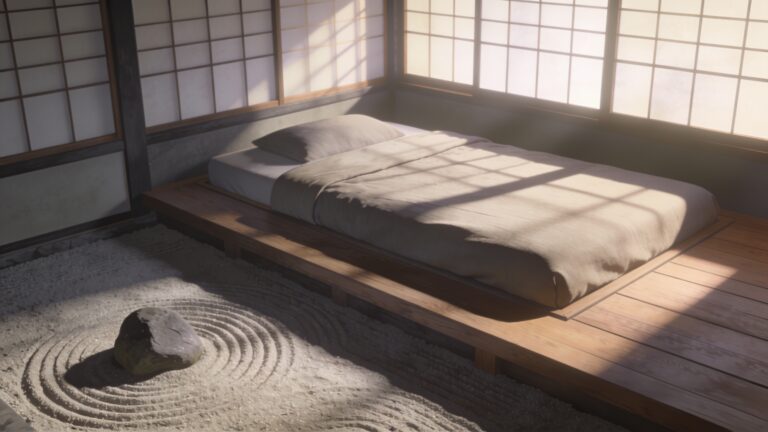
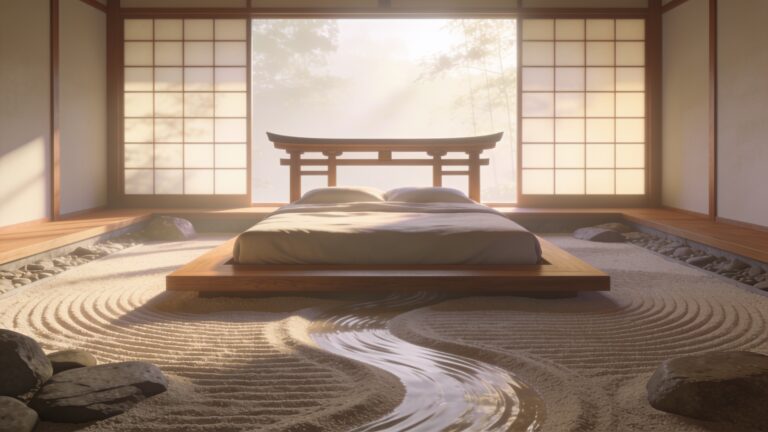
Zen style comes closest to traditional Japanese interiors, rooted in Buddhist ideas about simplicity and emptiness. Japandi is a modern fusion, blending Japanese restraint with Scandinavian warmth and function. Tatami-focused rooms are less a style and more a foundation, built around the woven straw mat flooring that changes how you use the whole room.
| Style | Core Feeling | Typical Materials | Best For |
|---|---|---|---|
| Zen | Calm, empty, meditative | Natural wood, stone, paper, linen | Small spaces, minimalists |
| Japandi | Warm, functional, cozy | Oak, walnut, wool, ceramic | Couples, family bedrooms |
| Tatami | Grounded, traditional | Rice straw mats, low wood furniture | Anyone wanting an authentic shift |
Zen Bedroom Fundamentals
A Zen bedroom is built on absence rather than addition. The goal is to remove until only what matters remains, which sounds simple but takes real discipline in a culture that sells us storage solutions for things we should just get rid of.
Color and Light
Stick to a palette pulled from nature. Think unbleached linen, pale wood, charcoal gray, and soft white. Avoid high-contrast combinations or anything glossy. Natural light matters more than most people realize, so if you have the option, swap heavy curtains for shoji-style screens or simple linen panels that filter rather than block.
Furniture Restraint
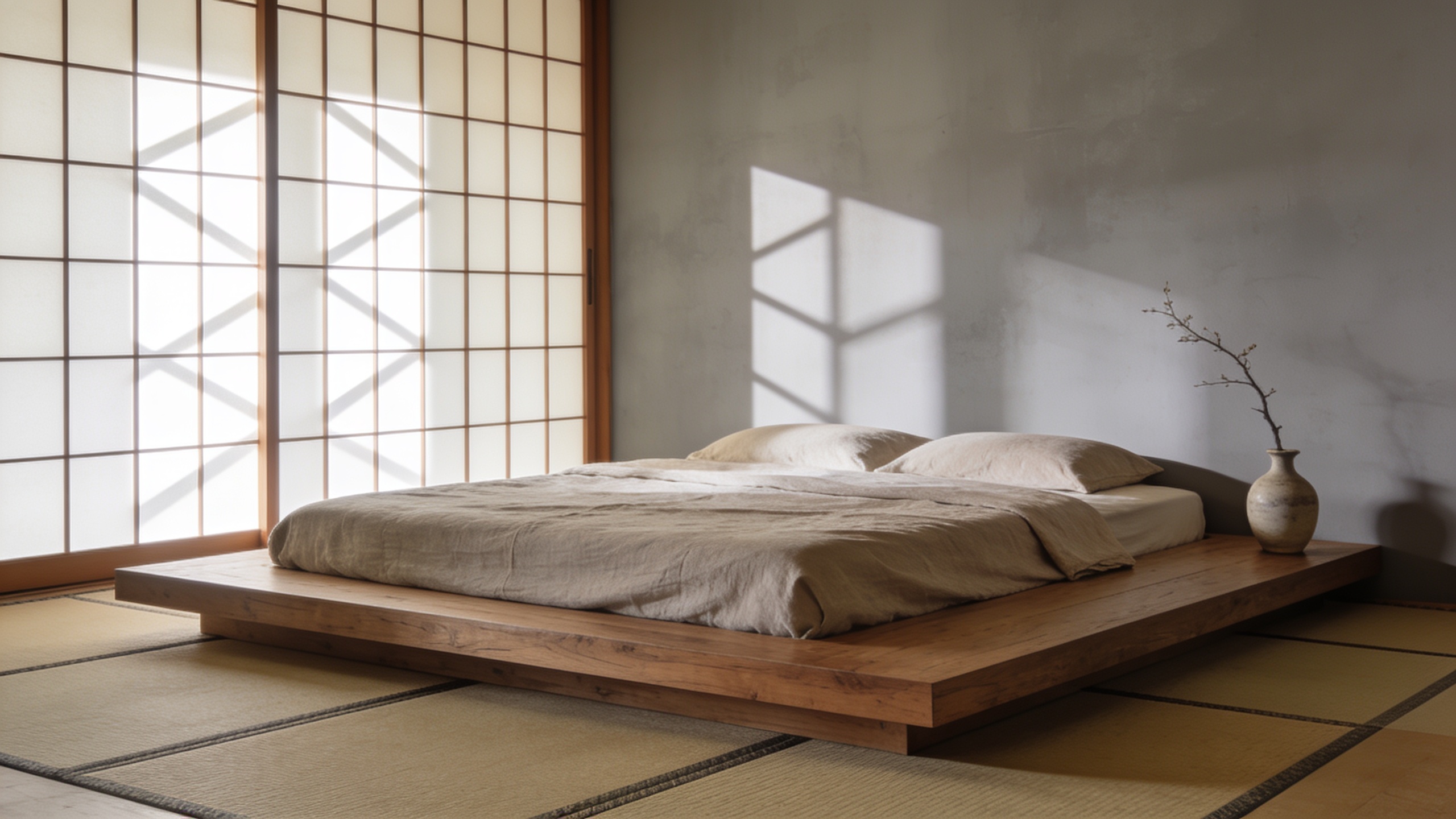
A Zen bedroom typically holds a low platform bed, one nightstand, and almost nothing else. No dresser crowding the corner, no chair collecting clothes. If you need storage, build it into the walls or under the platform bed itself so the room stays visually empty.
The Role of Negative Space
Japanese design calls this “ma”, the meaningful pause between objects. A Zen bedroom uses ma deliberately, leaving open floor space that has no function other than existing. It feels wasteful to the American eye at first. Give it two weeks and you’ll wonder why every other room feels so loud.
Japandi: The Livable Middle Ground
Japandi exists because pure Zen minimalism is tough to live with long term, especially if you share a bedroom with another person who has their own belongings and opinions. This style takes the Japanese emphasis on natural materials and quiet color, then adds Scandinavian comfort through texture, layered lighting, and slightly more furniture.
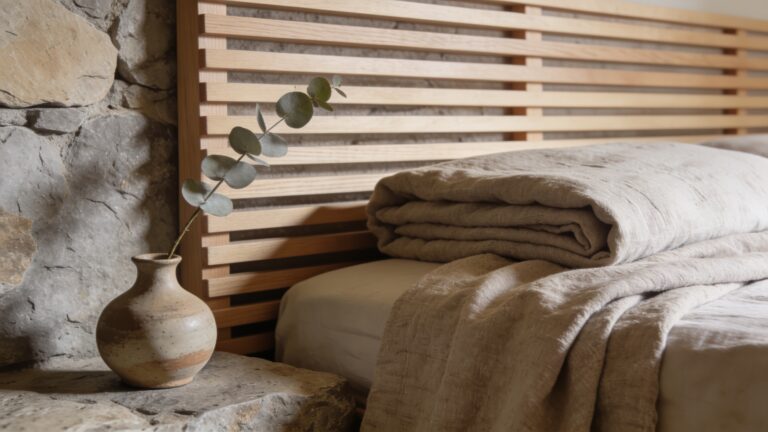
A Japandi bedroom might include a wooden bed frame with clean, low lines, paired with a chunky wool throw and a couple of sheepskin accents for warmth. The palette stays neutral but allows more variation than strict Zen, so you can bring in muted sage, warm terracotta, or soft charcoal without breaking the mood.
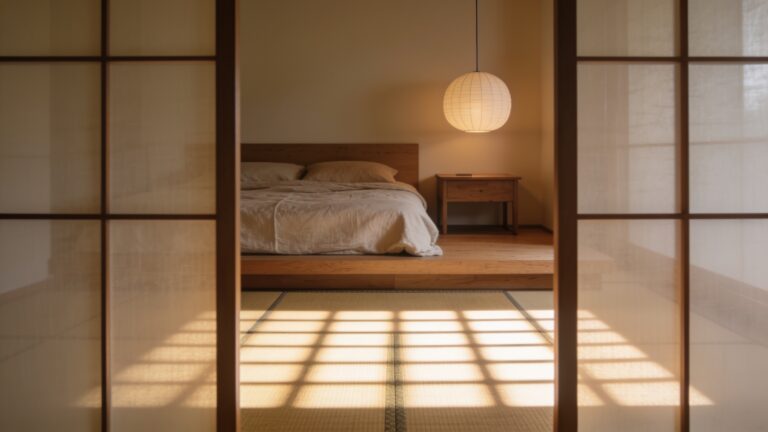
Lighting is where Japandi really earns its popularity. Instead of one harsh overhead fixture, use a paper pendant lamp, a small ceramic table lamp, and possibly a floor lamp with a linen shade. Layered, warm-toned light does more for a bedroom’s atmosphere than almost any other single change you can make.
Key Japandi elements worth prioritizing:
- Low-profile wood bed frame, ideally walnut or oak
- Handmade ceramic vases or bowls as the only decorative objects
- Wool or linen bedding in muted, earthy tones
- A single piece of functional art, like a woven wall hanging
- Woven baskets for hidden storage instead of visible bins
- Warm, layered lighting rather than one central fixture
Building a Tatami Bedroom
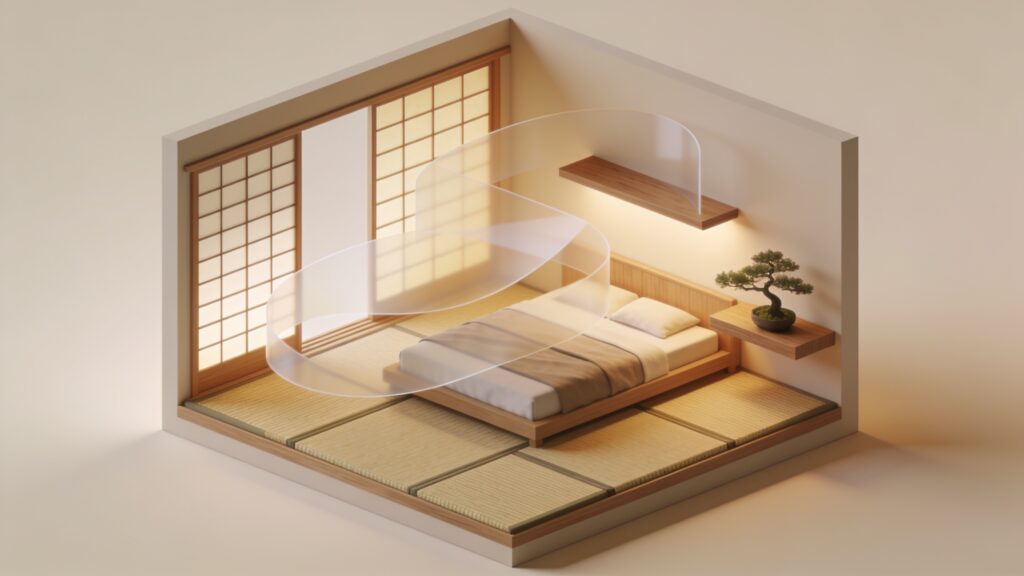
Tatami mats change the entire logic of a bedroom because they replace the idea of a raised bed with a futon that gets laid directly on the floor. This is the most traditional option and, for many people, the most rewarding to live with once they adjust.
Choosing Real Tatami vs. Modern Alternatives
Genuine tatami mats are made from woven igusa rush over a rice straw core, and they have a distinct smell and texture that synthetic versions can’t fully replicate. That said, modern tatami-style flooring made with compressed foam cores handles humidity better in most US climates, so I usually recommend it unless you live somewhere dry and are committed to mat maintenance.
Futon Care and Daily Ritual
A shikibuton, the thin Japanese floor mattress, needs to be aired out regularly to prevent moisture buildup against the tatami. Traditionally this means folding and storing it in a closet during the day, which also frees up the floor space for other use. It’s more work than an American mattress, but the daily ritual of putting the bed away is part of why this style feels so different to live with.
Furniture for a Tatami Room
Keep furniture low to match the floor-level sleeping arrangement. A low wooden table, a single floor cushion or two, and a small chest for folded bedding cover most needs. Avoid tall dressers or anything that visually competes with the horizontal plane of the room. The whole point is that your eye travels low and slow, not up and around.
Practical Tips for Any Approach
A few rules apply no matter which style you choose. Keep your color count under four total tones in the room. Choose one focal material, whether that’s wood, stone, or woven fiber, and repeat it rather than mixing several. Store everything that isn’t actively in use, since visible clutter undoes even the best-designed room in seconds. Finally, resist the urge to add decoration purely to fill a wall. Empty space is doing work too.
Final Thoughts
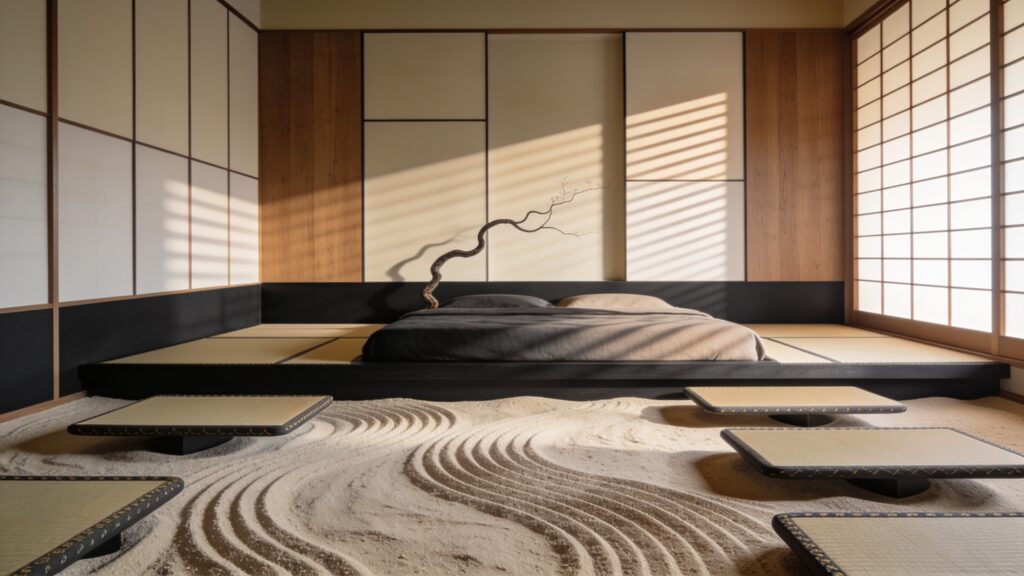
Whichever direction you take, the underlying lesson from Japanese bedroom design is the same: less stuff, better materials, and a room built for one purpose. Zen suits people who want maximum simplicity and don’t mind an austere look. Japandi works for households that need comfort and function alongside the calm. Tatami is for those ready to change their actual sleeping habits, not just their decor.
Start with one element rather than overhauling everything at once. Swap your bedding for natural linen, or clear your nightstand down to a single lamp and a book. Small, deliberate changes teach you what this style actually feels like before you commit to bigger ones. The room will thank you, and so will your sleep.