Why Do Japanese Sleep on the Floor: Smart or Strange?
 0
0
 0
0
I remember the first time a friend showed me photos from her trip to Kyoto. She’d stayed in a traditional ryokan, and there it was: a thin mattress laid directly on tatami mats, no bed frame in sight. Her first reaction was confusion. Mine was curiosity. Why would an entire culture choose to sleep at floor level when box springs and memory foam are one click away on any shopping app?
Turns out the answer isn’t about lacking furniture or money. It’s a deliberate practice rooted in centuries of design logic, climate adaptation, and health philosophy. Once you understand the reasoning, floor sleeping starts to look less like an old habit and more like a smart system that Western bedrooms could learn from.
The Tradition Behind the Futon
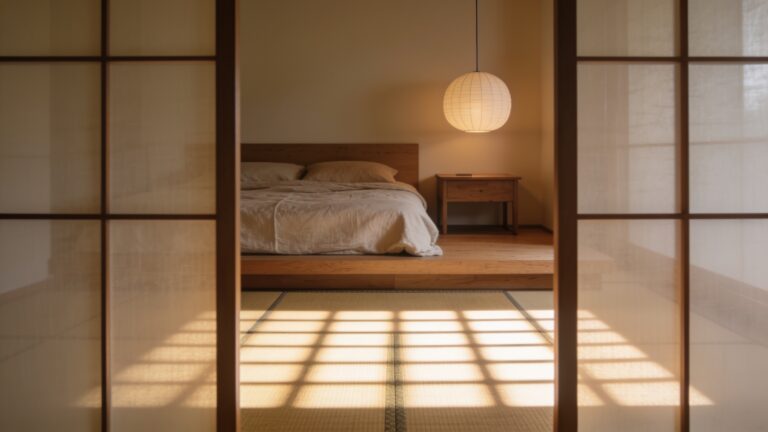
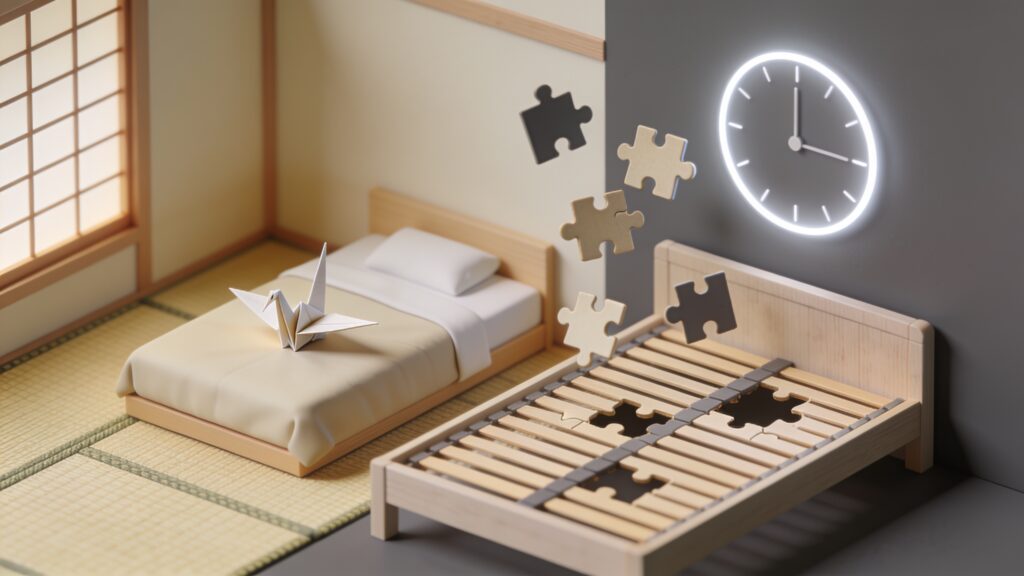
Japanese floor sleeping centers on two objects: the tatami mat and the futon. Tatami mats are woven from rice straw and rush grass, and they’ve covered Japanese floors since the Heian period over a thousand years ago. The futon, a thin cotton or synthetic-fill mattress, rolls out on top of the tatami each night and gets folded away each morning.
This pairing wasn’t an accident of poverty. Japanese homes historically were small, and multi-purpose rooms mattered. A bedroom by night became a living room or dining space by day the moment the futon got stored in a closet. That flexibility still shapes how many Japanese apartments function today, especially in dense cities like Tokyo and Osaka where square footage comes at a premium.
Practical Reasons Japanese Sleep on the Floor
Climate and Humidity Control
Japan’s summers are brutally humid, and elevated Western-style beds trap heat and moisture underneath the frame. Tatami mats breathe. The woven rush grass allows air to circulate, which helps regulate temperature and reduces the mustiness that builds up in enclosed bed frames. Sleeping closer to the floor also means cooler air in a room where heat rises and lingers near the ceiling.
Space Efficiency
A futon takes up zero floor space during the day once it’s folded into a closet called an oshiire. Compare that to a queen-size bed frame that permanently claims a third of a small bedroom. In cities where apartments often run under 500 square feet, that flexibility isn’t a nice bonus. It’s a necessity.
Cost and Simplicity
Futons cost less than mattress-and-frame combinations, and they’re far easier to clean. You can air them out on a balcony railing, beat the dust out with a paddle, and let sunlight kill off bacteria and dust mites naturally. No box spring means no hidden allergen trap.
Earthquake Safety
This one surprises most people. Japan sits on some of the most seismically active ground on earth, and a heavy bed frame becomes a hazard when it topples or slides during a quake. Sleeping at floor level reduces the distance you’d fall and lowers the risk of injury from furniture collapse. It’s a quiet but real safety consideration baked into everyday habits.
Health Claims: What’s Backed by Science and What Isn’t
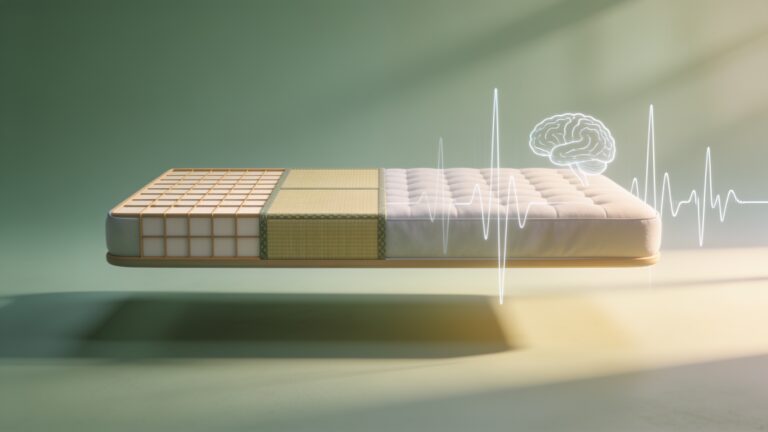
Advocates of floor sleeping often point to posture benefits, and there’s some legitimate science behind parts of this claim. A firm, flat sleeping surface can support spinal alignment better than a soft, sagging mattress that lets the hips sink out of line with the shoulders. Physical therapists frequently recommend firmer surfaces for people with certain types of lower back pain.
That said, the evidence isn’t universal. Firmness helps some people and aggravates others, particularly those with hip or shoulder joint issues who need cushioning at pressure points. Sleeping directly on a thin futon over tatami works well for many Japanese sleepers partly because tatami itself has slight give, unlike concrete or hardwood.
Here’s a breakdown of the commonly cited health claims and how much they actually hold up:
| Claim | Level of Evidence | Notes |
|---|---|---|
| Improves spinal alignment | Moderate | Firm surfaces help some back pain sufferers, not all |
| Reduces tossing and turning | Weak | Mostly anecdotal, varies by individual |
| Better air circulation reduces allergens | Moderate | Tatami and futons air out easily, reducing dust mite buildup |
| Increases deep sleep | Weak | No strong clinical studies confirm this directly |
| Lowers injury risk in earthquakes | Strong | Well documented in Japanese safety guidance |
The honest takeaway is that floor sleeping is a legitimate option for a lot of people, not a guaranteed upgrade for everyone. It depends heavily on your body, your existing pain points, and what surface you’re sleeping on.
Is It Smart or Strange? A Balanced Take
I’d argue “strange” is the wrong lens entirely. Floor sleeping looks unusual through a Western frame of reference because mattress-on-frame became the default there decades ago, largely for aesthetic and marketing reasons rather than superior sleep science. Japan simply developed a different default, and it’s one that solves real problems: heat, space, cost, and earthquake risk.
That doesn’t mean everyone should ditch their bed frame tomorrow. If you already sleep well and pain-free, there’s no compelling reason to switch. But if you’re dealing with a hot bedroom, a cramped apartment, or persistent lower back stiffness, trying a firmer sleep surface for a few weeks costs little and might teach you something about your own body.
A few practical points worth knowing if you want to experiment:
- Start with a quality futon at least 3 inches thick rather than sleeping directly on bare flooring, which offers zero cushioning and can aggravate joint pain.
- Use a base layer like tatami mats, a rug, or foam padding if you’re on hardwood or tile, since Japanese floors are designed with tatami’s natural give in mind.
- Air out your futon weekly, ideally in sunlight, to prevent moisture buildup and mold, which is the main maintenance downside of floor sleeping.
- Give it at least two to three weeks before judging results, since your body needs time to adjust to a firmer surface.
- Pay attention to hip and shoulder pressure points if you’re a side sleeper, since floor sleeping tends to suit back and stomach sleepers more comfortably.
Key Takeaways
Japanese floor sleeping isn’t a relic of scarcity. It’s a considered response to humidity, small living spaces, cost, and one of the most active earthquake zones on the planet. The health benefits are real for some sleepers and irrelevant for others, which makes it a personal experiment rather than a universal fix.
If your current setup works, there’s no reason to change it. But if you’ve been fighting a hot bedroom, a tiny apartment, or a mattress that never quite feels right, borrowing a page from Japanese sleep design costs you a futon and a few weeks of trial. Worst case, you learn your body prefers plush comfort. Best case, you discover a simpler, cooler, cheaper way to sleep that people have trusted for over a thousand years.