10 Calming Japandi Bedroom Designs
 0
0
 0
0
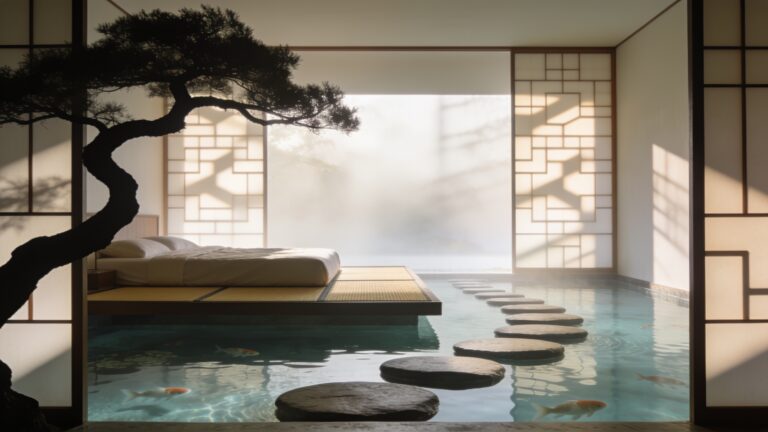
I’ve redesigned my own bedroom four times in the last decade, and the version that finally stuck is the quietest one. Japandi, the marriage of Japanese minimalism and Scandinavian warmth, strips a room down to what matters and leaves the rest out. The result is a space that feels like an exhale.
This style works because it borrows the best instincts from two design cultures that already agree on most things. Japanese interiors favor natural materials, low furniture, and negative space. Scandinavian design adds warmth through texture, light wood, and soft textiles. Put them together in a bedroom and you get a room built for rest, not for showing off.
Below are ten Japandi bedroom concepts I’ve pulled from real projects and personal experiments. Each one solves a different problem, whether that’s a small footprint, a lack of natural light, or a need for more storage without more visual noise.
1. The Low-Platform Foundation
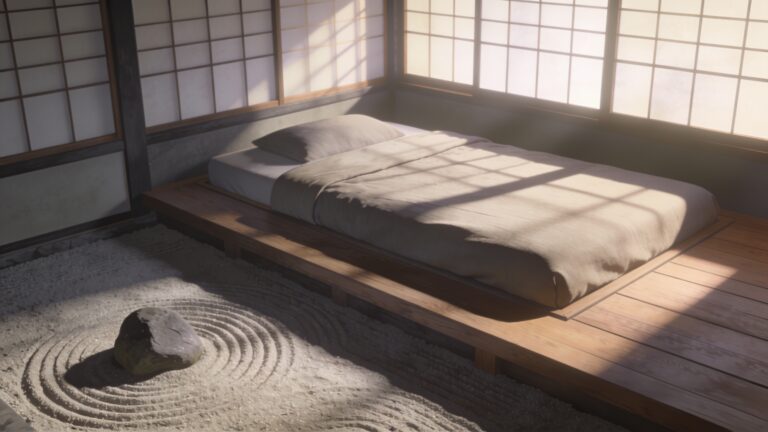
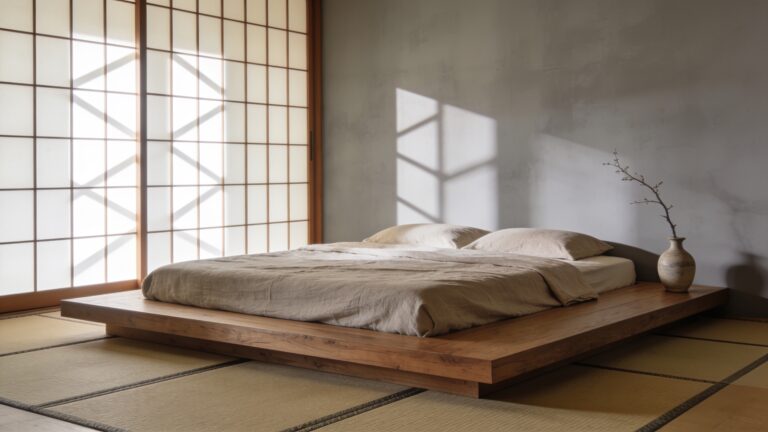
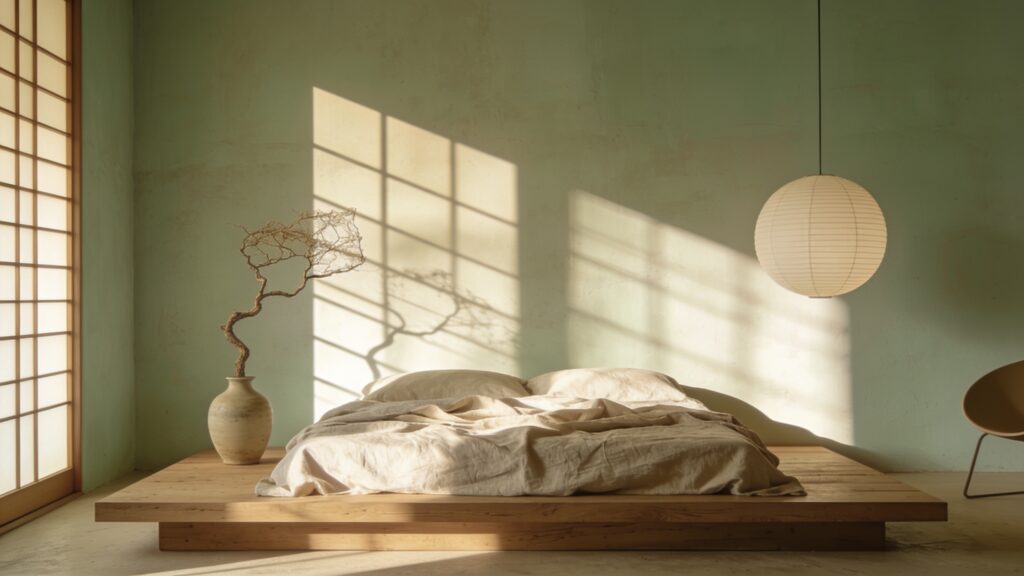
A low platform bed is the single most recognizable Japandi move, and it’s the first thing I recommend to anyone starting from scratch. The bed sits close to the floor, often on a simple wood frame with no headboard or a slatted one at most.
This lowers the visual center of gravity in the room. Ceilings feel higher, walls feel farther apart, and the whole space reads calmer even before you add anything else. Pair it with a mattress topper instead of a thick box spring to keep the silhouette clean.
2. Warm Neutral Walls Over Stark White
Plenty of people assume minimalism means white walls. In Japandi rooms, I lean toward warmer neutrals instead, things like oatmeal, soft clay, warm gray, or muted sage. Stark white can feel clinical, especially under artificial light at night.
A wall in a warm putty tone absorbs light softly and makes wood furniture look richer by contrast. It also hides scuffs and shadows better than bright white, which matters in a room you actually live in.
3. Natural Wood in at Least Three Tones
One mistake I see often is matching every wood surface in the room to the same shade. That flattens the space. Japandi design actually calls for mixing wood tones, as long as they share warmth.
- A pale ash or birch bed frame
- A mid-toned oak nightstand
- A darker walnut accent, like a bench or picture frame
- Woven rattan or cane on a chair or lamp shade for texture
The mix reads as intentional and layered rather than mismatched, because the undertones stay consistent even as the shades shift.
4. The Shoji-Inspired Room Divider
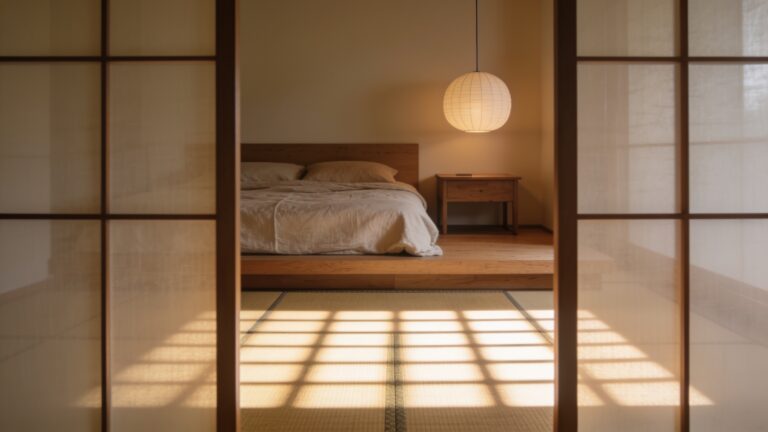
If your bedroom shares space with a home office or a walk-in closet, a shoji-style screen solves the separation problem without a wall. These sliding or folding panels use a wood lattice frame with translucent paper or fabric inserts, letting light pass through while still creating a visual boundary.
I used one in a studio apartment to separate a desk corner from the sleeping area. It cost far less than a partition wall and could move with me to the next place.
5. Floor Seating and a Low Reading Nook
A small chair and floor cushion combination near a window turns an unused corner into a spot people actually use. Add a low side table for tea or a book, and keep the cushion in a natural fiber like linen or cotton.
This nook works because it echoes the low platform bed. Everything in the room sits closer to the ground, which reinforces the grounded, settled feeling Japandi aims for.
6. Hidden Storage Instead of Visible Clutter
Clutter is the fastest way to ruin a calm room. Japandi solves this with storage that disappears rather than storage that’s decorative. Platform beds with drawer bases, built-in wardrobes with flush handles, and floating shelves with baskets all keep surfaces clear.
| Storage Type | Best For | Visual Impact |
|---|---|---|
| Platform bed with drawers | Small bedrooms, extra linens | Low, nearly invisible |
| Flush-panel wardrobe | Full clothing storage | Blends into wall, minimal hardware |
| Floating shelf with woven baskets | Books, accessories | Adds texture without visual weight |
| Under-bed rolling bins | Seasonal items | Fully hidden |
| Low dresser with tapered legs | Folded clothing | Light footprint, doesn’t crowd the room |
Choosing two or three of these, rather than one of everything, keeps the room from feeling like a showroom of storage solutions.
7. Linen Bedding in Muted, Earthy Colors
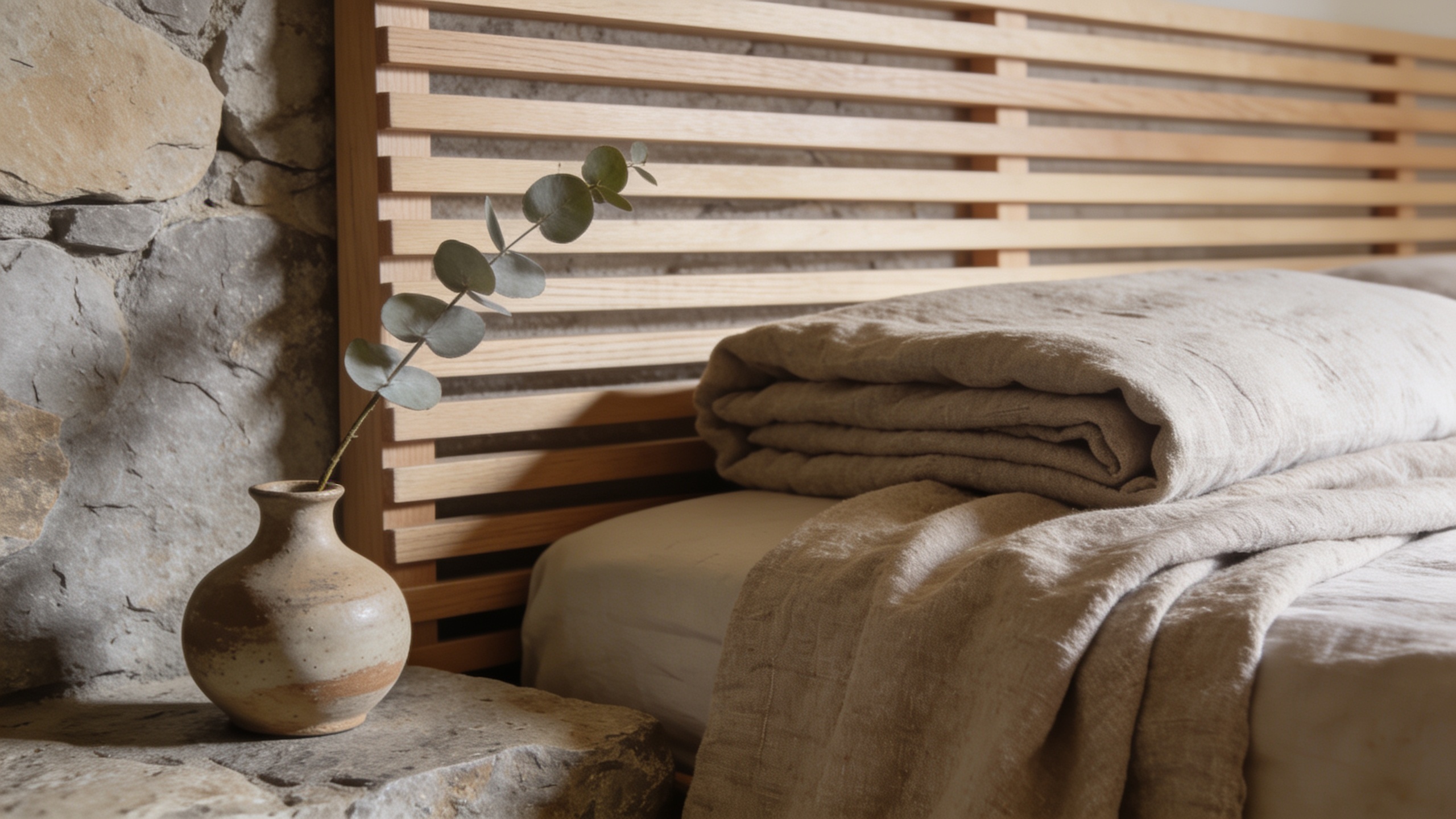
Crisp white hotel bedding looks sharp for a photo, but it isn’t the Japandi move. I prefer stonewashed linen in colors like clay, sand, moss, or charcoal. Linen wrinkles naturally and softens with every wash, which gives the bed a lived-in, relaxed quality instead of a stiff, staged one.
Layer a lightweight quilt over a heavier base blanket so the bed adapts to temperature without adding bulk. Keep pillow count low, two to four, rather than piling on decorative shams that need to be removed every night.
8. Paper or Linen Pendant Lighting
Overhead lighting in a Japandi bedroom should be soft, never harsh. A paper lantern pendant or a linen drum shade diffuses light evenly and casts none of the sharp shadows you get from exposed bulbs or spotlights.
I swapped a builder-grade flush mount for a simple washi paper pendant, and the change affected the whole room’s mood more than any furniture piece I’d bought that year. Add a dimmer switch if the fixture allows it, since evening light should sit well below daytime brightness.
9. A Single Statement Plant, Not a Jungle
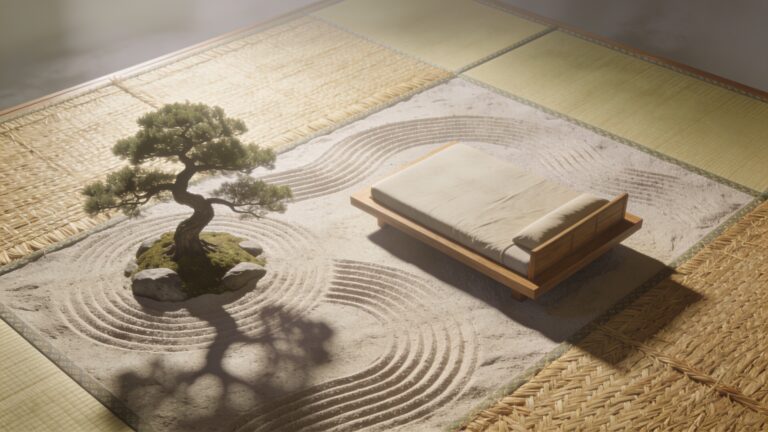
Japandi rooms use greenery sparingly and deliberately. One well-placed plant, something structural like a fiddle leaf fig, a snake plant, or a bonsai on a low stand, does more for the room than five scattered pots.
Place it near the window where it gets real light, and choose a simple unglazed ceramic or woven basket planter over anything ornate. The goal is a single living element that draws the eye without competing with the room’s quiet palette.
10. Layered, Natural Textiles Underfoot
A cold floor breaks the calm instantly. Layer a low-pile wool or jute rug under the bed, sized generously enough that your feet land on it when you get up. Avoid busy patterns. Solid neutrals or subtle woven textures keep the floor from becoming a focal point.
If the room already has warm wood flooring, a rug isn’t mandatory everywhere, but placing one at the foot of the bed and another near the reading nook adds warmth exactly where you need it most.
Bringing It All Together
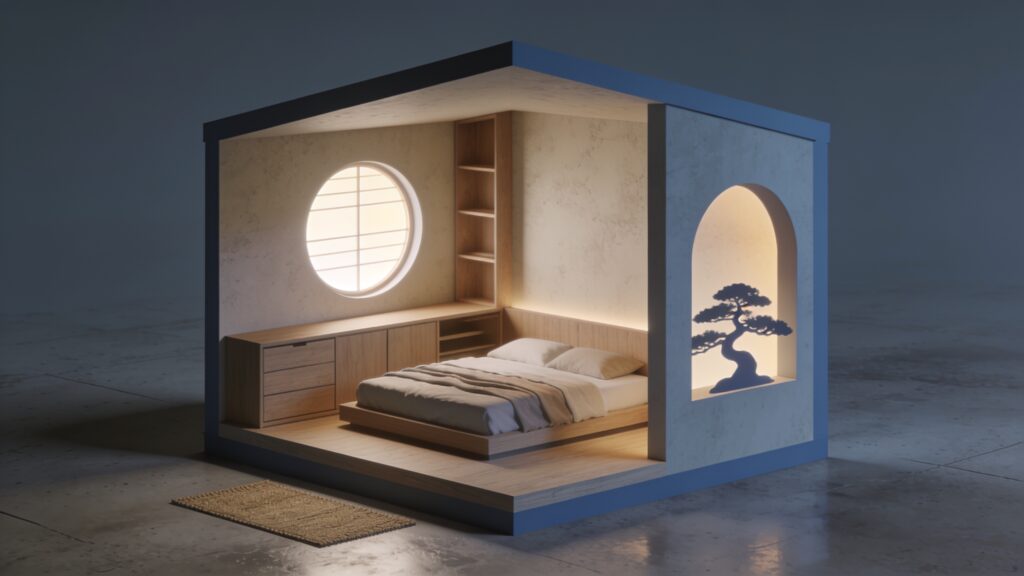
No single element on this list makes a Japandi bedroom. It’s the restraint across all of them, low furniture, warm neutrals, mixed natural materials, soft light, and next to no clutter, that gives the style its calm. Start with the bed and the walls, since those two choices set the tone for everything else you add.
If you’re redesigning on a budget, prioritize the platform bed, linen bedding, and lighting first. Storage and textiles can follow once you’ve lived in the space and figured out what it actually needs. A calm bedroom isn’t built in a weekend, but each change on this list moves you closer to a room that finally feels like rest.