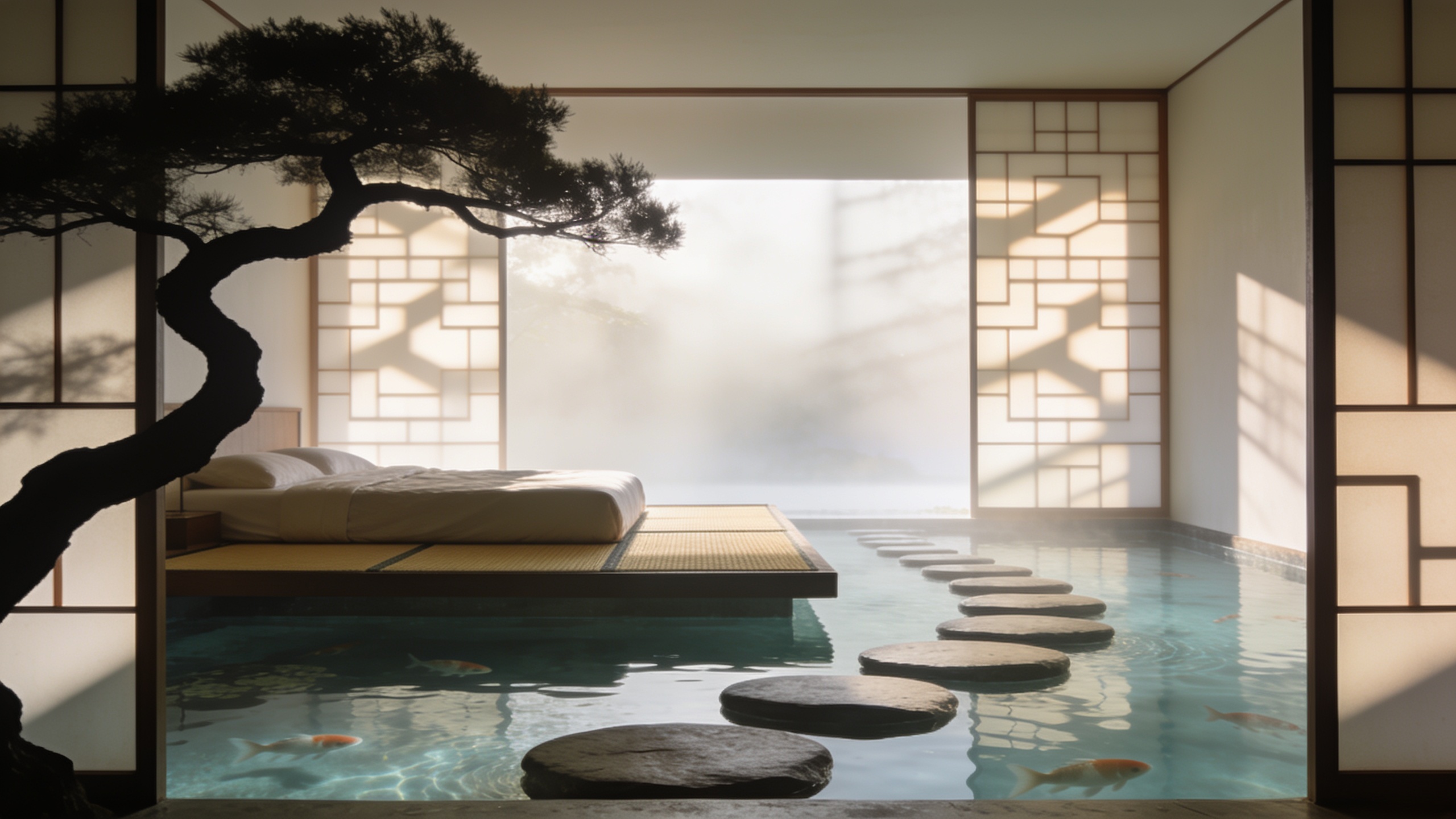
11 Modern Japanese Interior Design Ideas To Create A Calming Bedroom
 0
0
 0
0
Most bedrooms suffer from the same problem: too much stuff, too many colors, too much visual noise before you’ve even had your morning coffee. Japanese design solves this by treating the bedroom as a space for rest first, decoration second. After years of writing about interiors and testing ideas in my own home, I’ve found that a handful of Japanese design principles can transform a cluttered, chaotic bedroom into something that actually helps you sleep.
This isn’t about buying a futon and calling it done. Modern Japanese bedroom design blends centuries-old philosophy with contemporary materials and layouts. Below are eleven ideas that work whether you live in a studio apartment or a sprawling suburban house.
1. Start With Ma: The Power of Empty Space
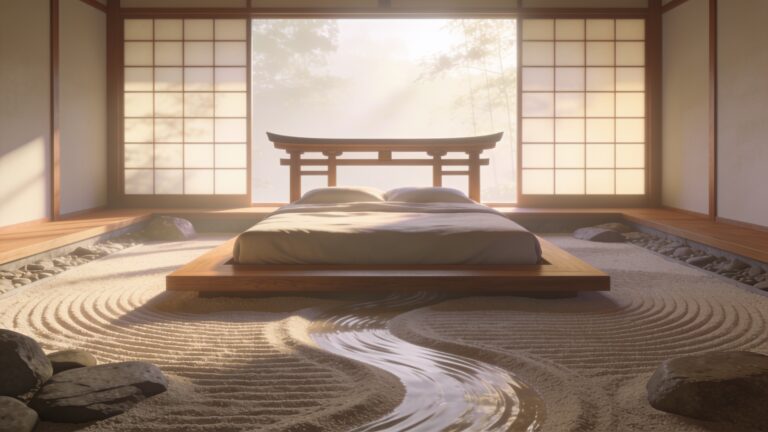
Ma is the Japanese concept of intentional emptiness. It’s the idea that the space between objects matters as much as the objects themselves. In practice, this means resisting the urge to fill every corner of your bedroom with furniture or decor.
Leave open floor space near windows or walls. Let your eye rest somewhere in the room without hitting a decorative object every few feet. This single shift changes how a room feels almost instantly.
2. Choose a Low Platform Bed
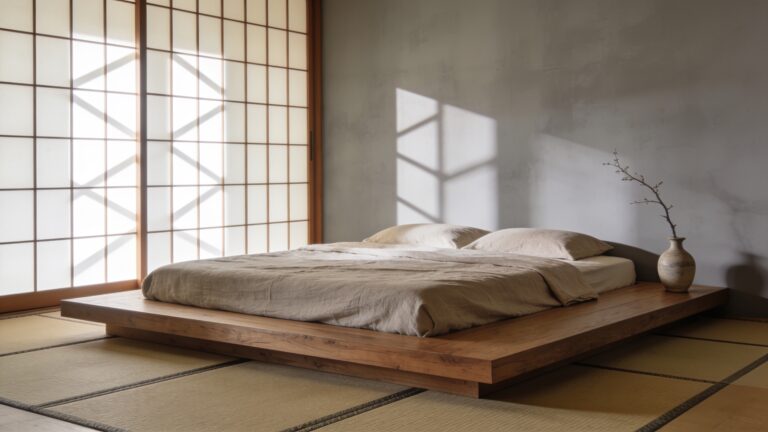
Traditional Japanese sleeping arrangements use tatami mats and futons placed directly on the floor. Modern adaptations keep that low-to-the-ground feeling with platform beds, usually 8 to 14 inches off the floor.
Lower beds create a grounded, stable feeling in a room and make ceilings feel higher by comparison. Look for platform frames in solid wood like oak, walnut, or ash, with clean lines and no ornate detailing.
3. Use a Natural, Muted Color Palette
Japanese interiors rarely use bold or saturated colors in bedrooms. Instead, they draw from nature: beige, sand, soft gray, muted green, and warm brown. These tones lower visual stimulation and help the nervous system settle.
If you want a quick way to test this, look at your current bedroom and count how many distinct colors are visible. Most calming Japanese-inspired bedrooms limit the palette to three or four closely related tones.
4. Bring In Natural Materials
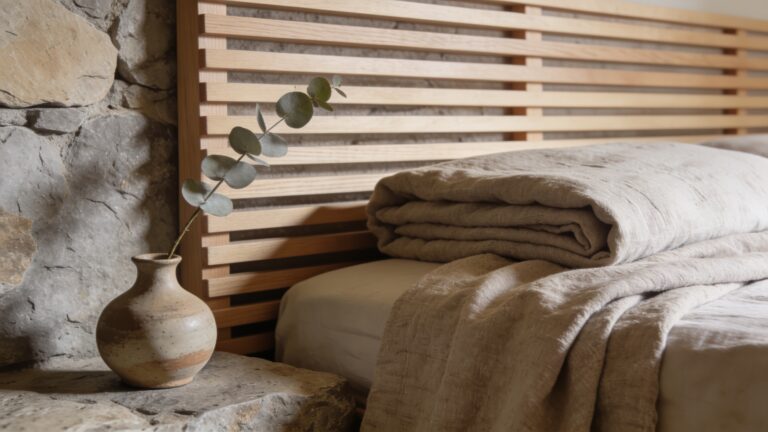
Material choice matters as much as color in Japanese design. Wood, paper, bamboo, stone, and linen all carry warmth and texture that synthetic materials can’t replicate.
Here’s a quick reference for materials that consistently work well in this style:
| Material | Best Use in Bedroom | Why It Works |
|---|---|---|
| Light oak or ash wood | Bed frame, flooring, nightstands | Warm tone, visible grain, calming to the eye |
| Washi paper | Lamp shades, room dividers | Diffuses light softly, adds texture |
| Bamboo | Blinds, small storage, accents | Lightweight, natural texture, sustainable |
| Linen | Bedding, curtains | Breathable, wrinkles gracefully, muted texture |
| Stone or ceramic | Small decor, vases | Grounding, cool contrast to warm wood |
Mixing two or three of these materials in one room gives enough variety to feel rich without becoming busy.
5. Install Shoji-Inspired Screens or Panels
Shoji screens use translucent paper stretched over wood frames to filter light and divide space without blocking it entirely. You don’t need a full traditional shoji wall to get this effect.
Consider a sliding panel closet door with a shoji-style grid pattern, or a folding screen used to separate a reading nook from the sleeping area. The soft, diffused light these panels create is far gentler than harsh overhead lighting.
6. Prioritize Hidden, Built-In Storage
Clutter is the enemy of calm, and Japanese design handles this through built-in storage rather than visible furniture. Closets with sliding doors, under-platform drawers, and wall-mounted cabinets keep belongings out of sight.
A few practical approaches:
- Choose a platform bed with built-in drawers underneath for linens or seasonal clothing
- Install floor-to-ceiling closets with flush, handle-free doors
- Use woven baskets tucked into closets for small items instead of open shelving
- Keep nightstands to one or two drawers maximum, nothing open-faced
The goal is a room where everything has a home you can’t see from the bed.
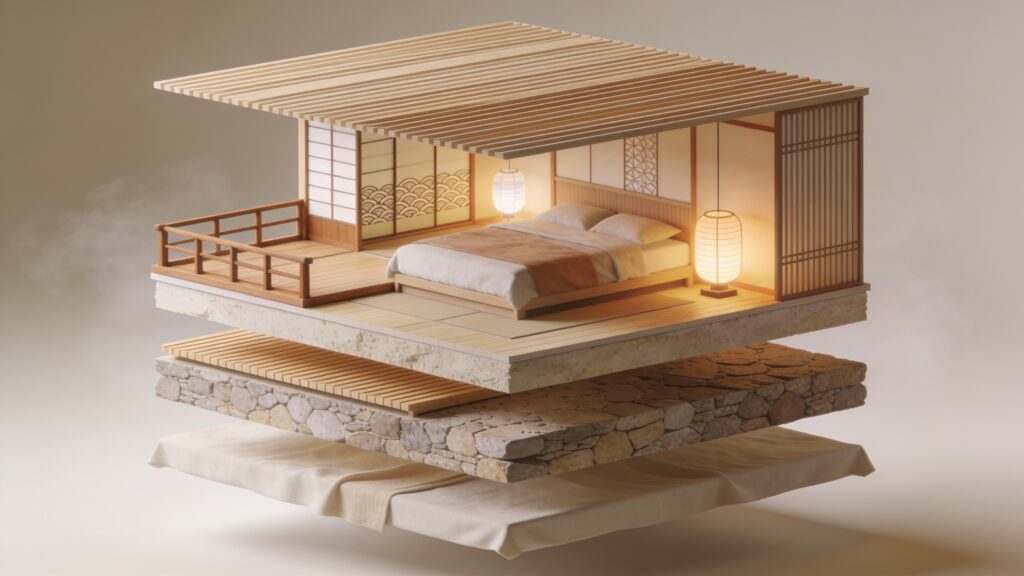
7. Layer Lighting Instead of Relying on One Source
Harsh overhead lighting works against a calming atmosphere. Japanese-inspired bedrooms typically use two or three light sources at different heights: a floor lamp, a low table lamp, and indirect wall or ceiling coves.
Warm-toned bulbs, around 2700K, mimic candlelight and support the body’s natural wind-down process in the evening. Paper or fabric shades soften the light further, avoiding the sharp glare of exposed bulbs.
8. Add a Single Statement Plant
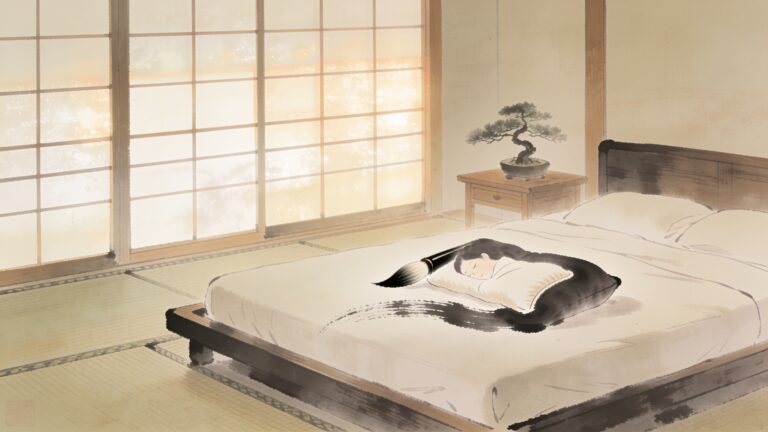
Rather than filling a room with greenery, Japanese design favors one well-chosen plant given room to breathe. A bonsai tree, a single bamboo stalk, or a simple potted fern placed near a window works better than five scattered plants.
This ties back to the principle of restraint. One plant, placed thoughtfully, draws attention and creates a focal point without competing with the rest of the room.
9. Keep Window Treatments Simple
Heavy drapes, layered curtains, and elaborate valances have no place in this style. Bamboo blinds, simple linen curtains, or shoji-style sliding panels let in soft, filtered light while keeping the window area visually quiet.
If privacy is a concern, layer a sheer linen panel behind a bamboo blind rather than adding thick blackout curtains with decorative trim. The effect stays soft rather than heavy.
10. Introduce Tatami Texture Underfoot
You don’t need to tatami-mat your entire bedroom to get the benefit of this material. A single tatami rug or mat placed beside the bed or under a reading chair introduces the texture and scent without a full renovation.
Tatami is made from woven rice straw and has a subtle, grounding fragrance that many people find calming. It also gives visual contrast against wood flooring or a light rug.
11. Design an Uncluttered Focal Wall
Instead of a gallery wall or multiple frames, choose one wall for a single piece of art, a hanging scroll, or a simple ceramic piece on a floating shelf. This is the visual equivalent of Ma applied to your walls.
A single ink-wash painting or a minimalist wood-framed print carries more weight than a dozen smaller pieces competing for attention. Let that one wall do the talking.

Bringing It All Together
None of these eleven ideas require a full renovation or a five-figure budget. Start small: swap your bedding for linen in a muted tone, remove half the objects currently on your nightstand, and add one lamp with warm light. Notice how the room feels after just those three changes.
Japanese bedroom design succeeds because it treats restraint as a feature, not a limitation. Every material, color, and object earns its place by contributing to rest rather than distraction. Pick two or three ideas from this list that feel most doable right now, apply them this weekend, and build from there. Your bedroom doesn’t need more decoration. It needs more room to breathe.