Zen-Inspired Japanese Bedroom: A Practical Guide to Calm, Minimalist Sleep Spaces
 0
0
 0
0
I’ve redesigned more bedrooms than I can count, and the requests I hear most often sound like this: “I want my room to feel calmer.” Nine times out of ten, when I show clients photos of Japanese-inspired interiors, something clicks. There’s a reason for that reaction. Zen design isn’t a trend chasing aesthetics. It’s a set of principles built around removing distraction so the mind can actually rest.
This guide breaks down exactly how to bring that philosophy into your bedroom, from the furniture you choose to the way you fold your linens. I’ll skip the vague inspiration talk and get into specifics you can act on this weekend.
What “Zen-Inspired” Actually Means
The term gets thrown around loosely, so let’s ground it. Zen Buddhism prizes simplicity, impermanence, and presence. Japanese interior design translates those ideas into physical space through three concepts: ma (negative space), wabi-sabi (beauty in imperfection and age), and shizen (naturalness).
A Zen bedroom isn’t sparse for the sake of looking trendy on social media. Every object left in the room earns its place. Everything else gets removed. That single filtering habit does more for a calm atmosphere than any paint color or throw pillow ever will.
Start With the Bed, Not the Decor
Most people redesign a room by shopping for decor first. Flip that order. In a Japanese-style bedroom, the bed itself sets the tone.
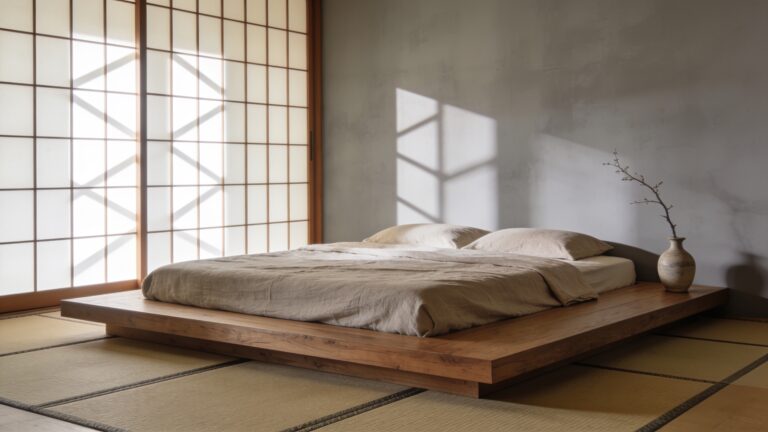
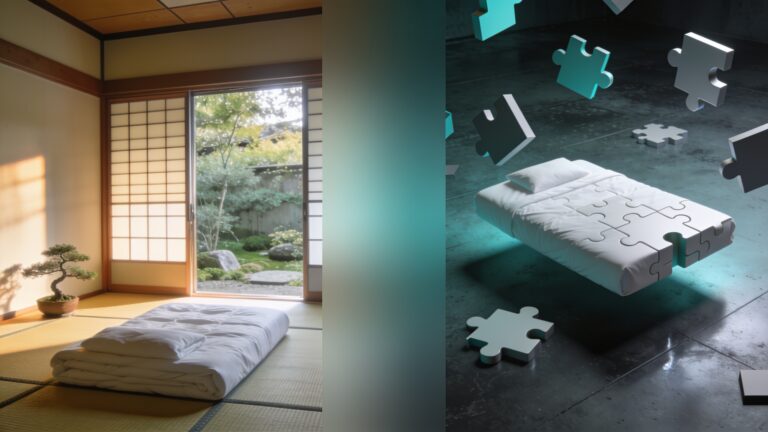
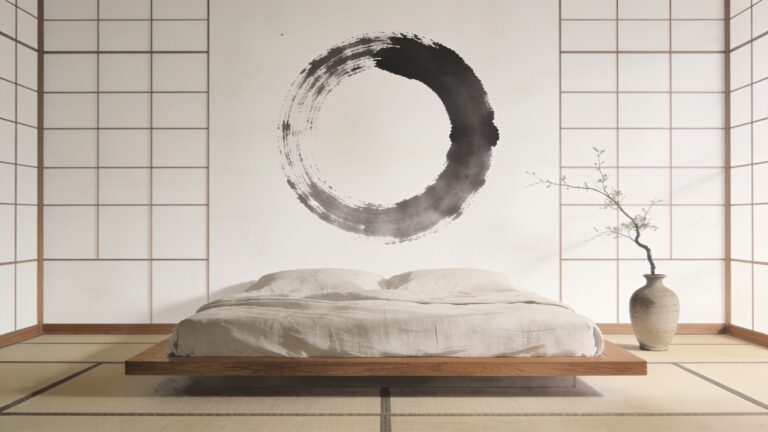
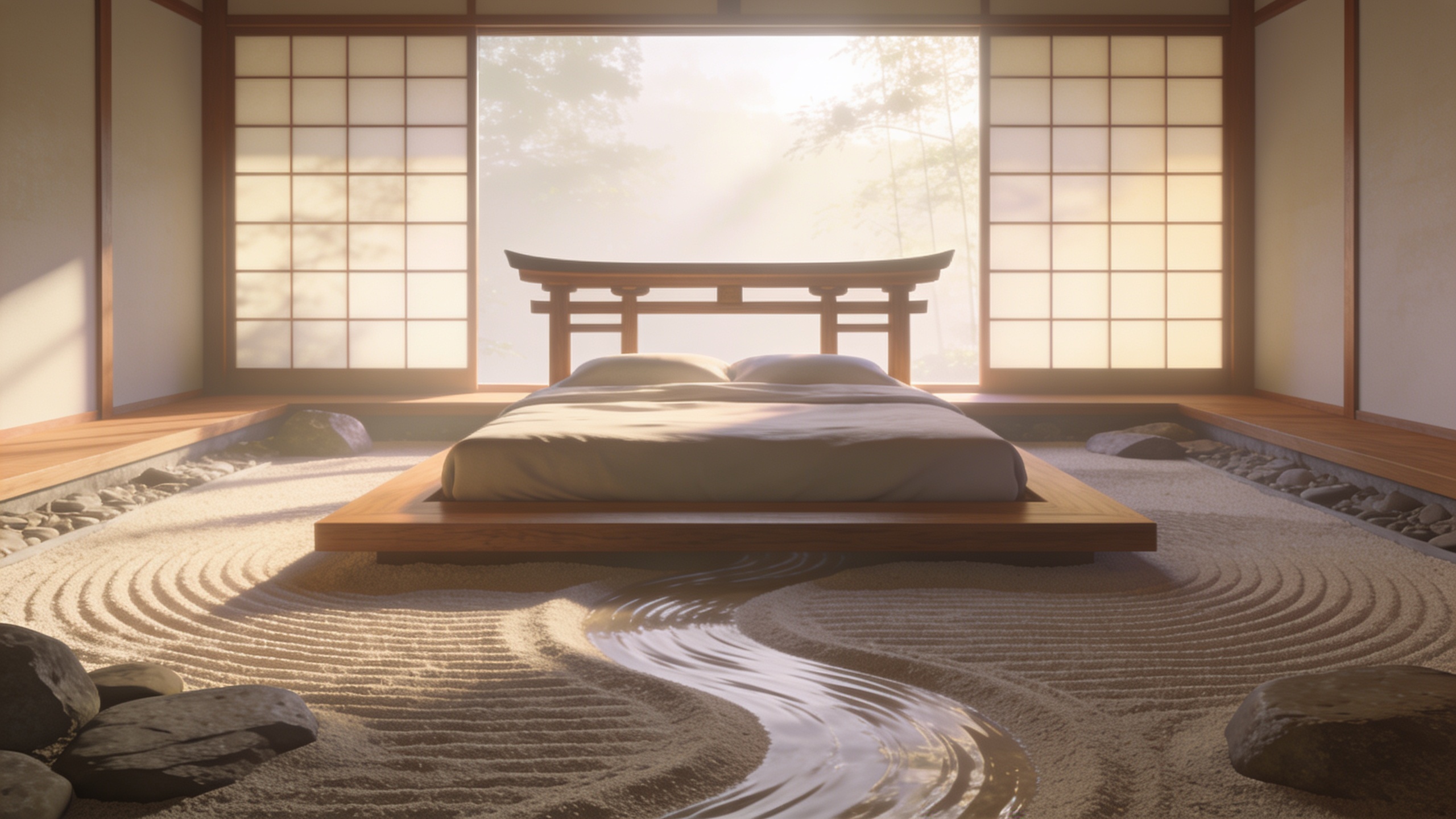
Futon or low platform bed. Traditional Japanese sleeping setups use a shikibuton, a thin cotton or foam mattress laid directly on tatami mats or a wooden floor. Modern adaptations use a low platform bed frame, usually six to twelve inches off the ground. The low profile keeps sightlines open and makes the room feel larger, even in small spaces.
Neutral, natural bedding. Skip busy patterns. Choose cotton, linen, or hemp in muted tones: off-white, sand, charcoal, soft moss green. Texture matters more than color variety here.
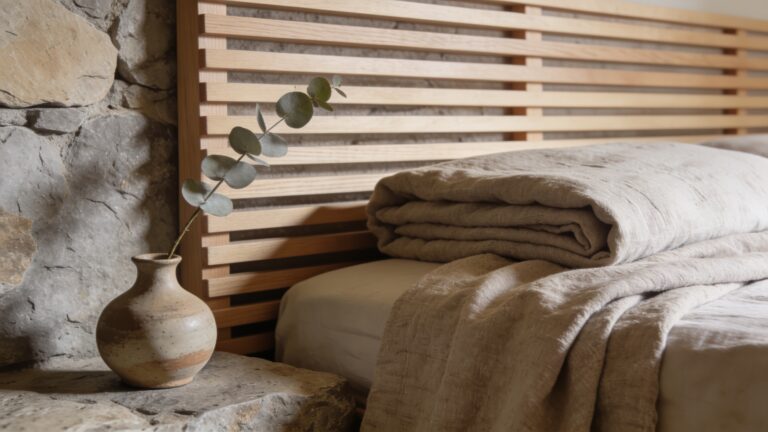
No headboard, or a minimal one. A tall upholstered headboard fights the low, grounded look you’re after. If you want something behind you, a simple wood panel does the job.
Furniture: Fewer Pieces, Better Ones
Japanese interiors run on quality over quantity. A room with three well-chosen pieces beats a room with ten mediocre ones every time.
- Low wooden dresser or chest (tansu style): Solid wood, clean lines, no ornate hardware.
- A single nightstand, not a matching pair: Asymmetry is welcome in Japanese design. It reads as natural rather than showroom-staged.
- One chair or floor cushion (zabuton): For reading or meditation, not for piling clothes.
- Shoji-style screen: Useful for dividing space or softening light from a window, especially in studio apartments.
- Low table, optional: If you have room, a small table near the window for tea or journaling adds function without clutter.
Stick to natural materials throughout: bamboo, oak, cedar, paper, cotton, stone. Avoid glossy plastic, chrome, and anything that reflects light aggressively. Matte finishes absorb visual noise the way soft lighting absorbs harsh shadows.
Color Palette and Materials
Color in a Zen bedroom works like background music. It should support the mood without demanding attention.
| Element | Recommended Choice | Avoid |
|---|---|---|
| Walls | Warm white, beige, soft gray, pale sage | Bright white, saturated colors |
| Flooring | Tatami mats, light oak, bamboo | Dark laminate, patterned tile |
| Bedding | Cotton, linen, hemp in neutral tones | Silk with heavy prints, synthetic fibers |
| Wood tones | Light to medium oak, cedar, bamboo | Dark mahogany, glossy lacquer |
| Metal accents | Matte black, brushed brass, sparingly | Chrome, polished silver |
Notice the pattern. Everything on the “recommended” side has a matte or slightly textured surface. Nothing shouts. That’s intentional. A Zen bedroom uses color the way a good editor uses adjectives: sparingly, and only when it earns its place.

Lighting: Soft, Layered, Indirect
Harsh overhead lighting kills the mood of any Zen-inspired space instantly. Direct bulbs create glare and shadow in the wrong places, and that reads as clinical rather than calm.
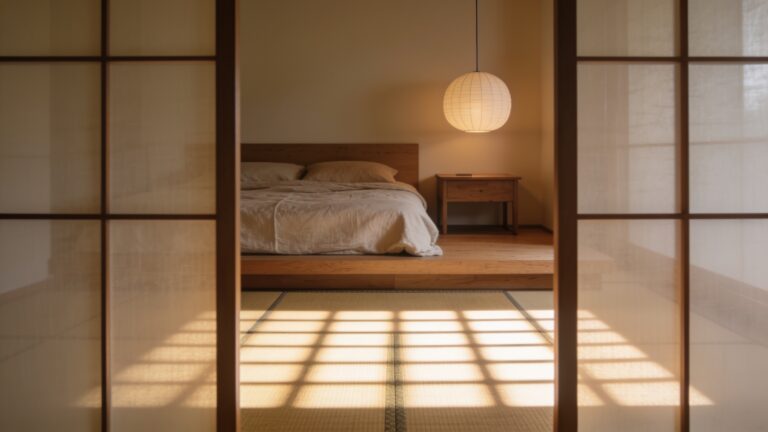
Instead, layer your light sources. Use a floor lamp with a paper or linen shade for ambient light. Add a small table lamp near the bed for reading. If you have access to natural light, install shoji screens or bamboo blinds that filter sunlight into a soft, diffused glow rather than blocking it out completely.
Warm-toned LED bulbs, around 2700K to 3000K, mimic candlelight without the fire risk. Skip cool white bulbs entirely. They belong in offices, not bedrooms built for rest.
The Role of Plants and Natural Elements
Bringing nature indoors, called shizen, is core to Zen philosophy. This doesn’t mean turning your bedroom into a greenhouse. One or two carefully chosen plants do more work than a dozen scattered around the room.
Bamboo palms, snake plants, and bonsai trees all fit the aesthetic and tolerate indoor conditions well. Place a single plant near the window where it gets natural light, and resist the urge to add more just because you have empty surface space. Empty surface space is the point.
A small stone or ceramic bowl, a piece of driftwood, or a single ikebana-style flower arrangement can serve the same purpose as a plant: a quiet nod to nature without visual clutter.
Decluttering: The Non-Negotiable Step
None of the above matters if your closet door won’t close and your nightstand has three years of receipts on it. Zen design demands storage discipline.
Use closed storage wherever possible. Low chests, built-in closets, and under-bed drawers keep belongings out of sight without eliminating function. If you can see it, it should be there on purpose, not because you had nowhere else to put it.
Set a rule for yourself: nothing goes on a visible surface unless you use it daily or find it beautiful. That single habit will do more to create a calm bedroom than any purchase on this list.

Bringing It All Together
A Zen-inspired Japanese bedroom rewards patience over impulse shopping. You don’t need to buy everything at once, and honestly, you shouldn’t. Start with the bed and lighting, live with those changes for a few weeks, then add furniture and greenery as the room tells you what it needs.
The goal isn’t a photo-ready showroom. It’s a room where your nervous system can actually downshift at the end of the day. Strip away what doesn’t serve rest, choose natural materials that age well, and let empty space do some of the design work for you.
Pick one section of this guide, the bed, the lighting, or the decluttering step, and tackle it this weekend. Small, deliberate changes compound faster than a total overhaul, and you’ll feel the difference the first night you sleep in the space.