Serene Japanese Bedroom Ideas: Minimalist & Natural Aesthetics
 0
0
 0
0
My bedroom used to look like a storage unit with a mattress in it. Books stacked on the floor, cables tangled behind the nightstand, a chair that held clothes instead of people. I redesigned it around Japanese principles two years ago, and it changed how I sleep and how I feel walking through the door at the end of a long day. This isn’t about buying a few bamboo plants and calling it zen. It’s a full rethink of how a room functions.
Japanese bedroom design draws from centuries of architectural philosophy, particularly wabi-sabi (the beauty of imperfection) and ma (the power of empty space). These aren’t decorating trends. They’re ways of thinking about a room that prioritize calm over clutter and function over decoration for decoration’s sake.
Why Japanese Design Works So Well for Bedrooms
A bedroom has one job: help you rest. Western bedroom design often forgets this, piling on throw pillows, layered rugs, and furniture that has no purpose beyond filling space. Japanese design strips that away and asks what you actually need to sleep well and wake up calm.
The core idea is that visual noise creates mental noise. Every object your eyes land on before sleep is a small demand on your attention. A room with fewer, better-chosen things gives your mind less to process and more room to settle.
This approach also ages well. A minimalist room with natural materials doesn’t go out of style the way a trend-driven color palette does. You’re not redecorating every three years to keep up.
The Foundation: Futons, Tatami, and Low Furniture
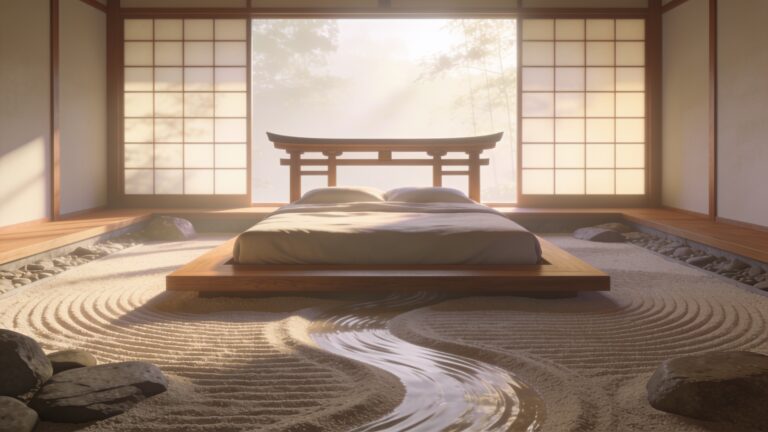
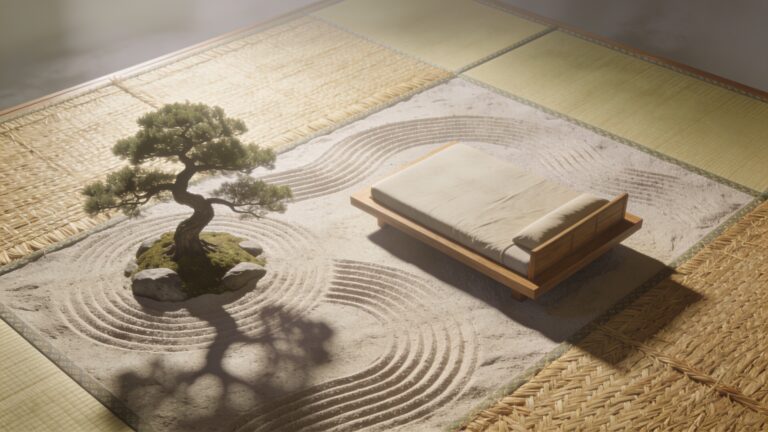
Traditional Japanese bedrooms use a futon laid directly on a tatami mat, and this low-to-the-ground setup is central to the aesthetic. You don’t need a full tatami room to capture this feeling, but lowering your furniture profile makes a real difference.
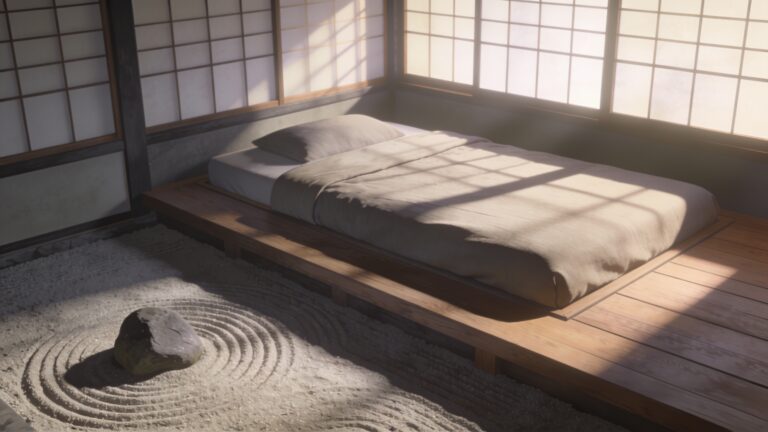
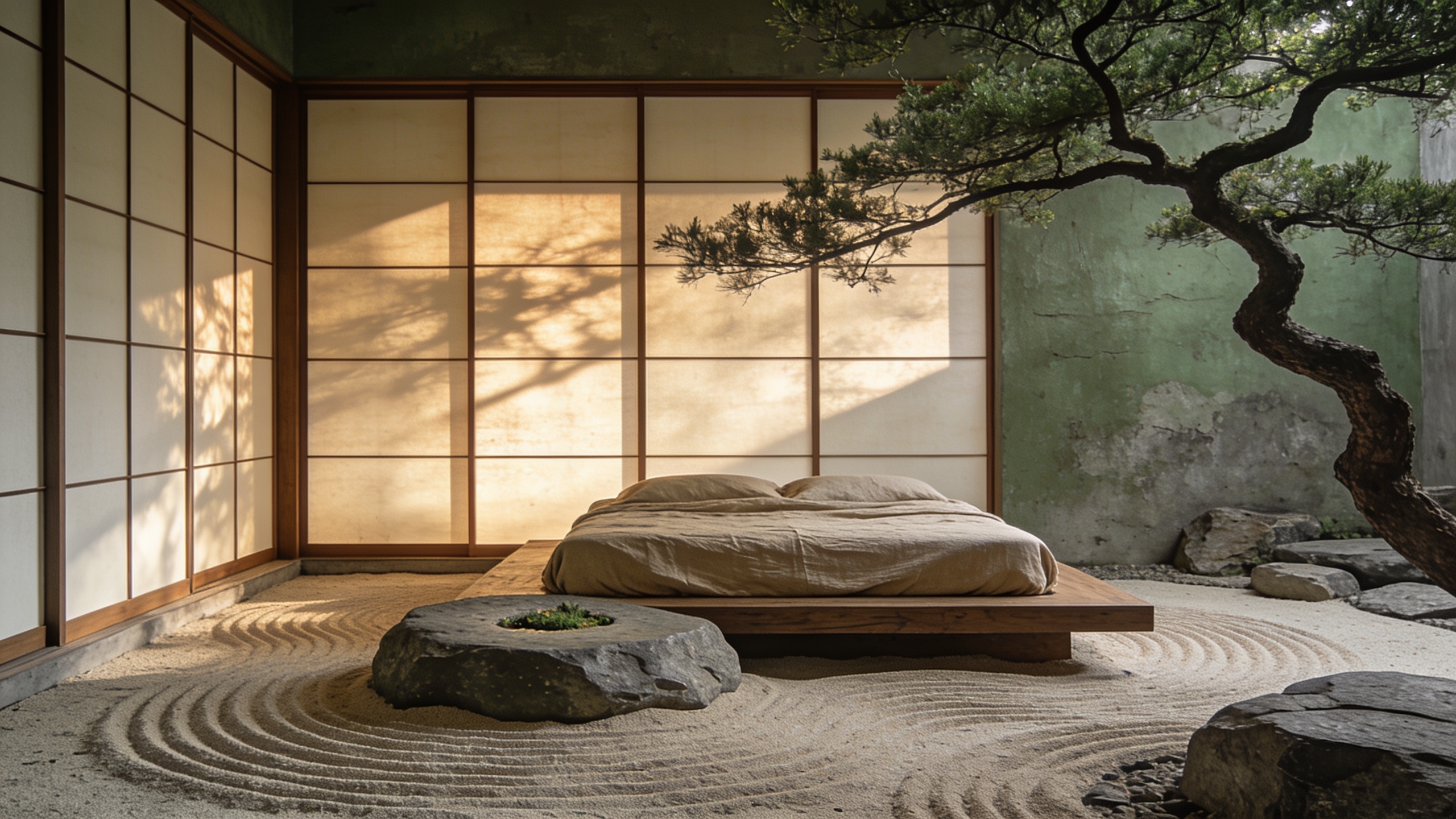
A platform bed sitting low to the floor, paired with a simple frame in unfinished or lightly stained wood, gives you that grounded feeling without requiring a full renovation. If you want to go further, a shikibuton (a Japanese floor mattress) on a tatami-style mat delivers the authentic experience and forces you to keep the floor area clear, since there’s no bed frame to hide clutter under.
Practical options depending on your commitment level:
- Full authentic setup: tatami mats plus a shikibuton, stored away each morning
- Middle ground: a low platform bed frame with a standard mattress
- Minimal change: remove your existing bed frame’s legs or swap for a lower model
- Renters’ solution: a floor bed frame that requires no wall mounting or floor modification
Color Palette and Materials
Japanese interiors lean on a narrow, calm palette drawn directly from nature. Think unbleached linen, pale wood, charcoal gray, moss green, and soft off-white. Bright colors and high-contrast patterns rarely appear because they compete with the room’s purpose.
Wood is the backbone material. Hinoki cypress, cedar, and oak show up constantly in Japanese interiors because they age gracefully and carry a subtle scent that Western manufactured furniture can’t replicate. If solid wood furniture is out of budget, even a few unfinished wood accessories, a tray, a stool, a lamp base, bring texture into the room without a big investment.
Paper, cotton, and linen dominate the soft furnishings. Shoji-style paper screens diffuse light beautifully and add texture without pattern. Cotton or linen bedding in neutral tones replaces the synthetic, heavily printed sets common in big box stores.
| Element | Traditional Choice | Accessible Alternative |
|---|---|---|
| Flooring | Tatami mat | Jute or sisal rug |
| Bed | Futon on tatami | Low platform bed frame |
| Window treatment | Shoji screen | Linen roller shade |
| Lighting | Paper lantern (andon) | Frosted glass pendant |
| Storage | Built-in oshiire closet | Low wooden chest |
| Bedding | Cotton futon cover | Linen duvet set in neutral tone |
Lighting That Doesn’t Fight Your Circadian Rhythm
Overhead lighting in most bedrooms is too bright and too cold for evening use. Japanese design favors warm, diffused, low light sources placed near the floor or at seated height rather than blasting down from the ceiling.
A paper lantern or andon-style lamp on the floor or a low table gives you enough light to move around without jolting your system awake. If you’re working from a standard bedroom setup, swapping your overhead bulb for a warm 2700K bulb and adding one or two floor-level lamps gets you most of the way there.
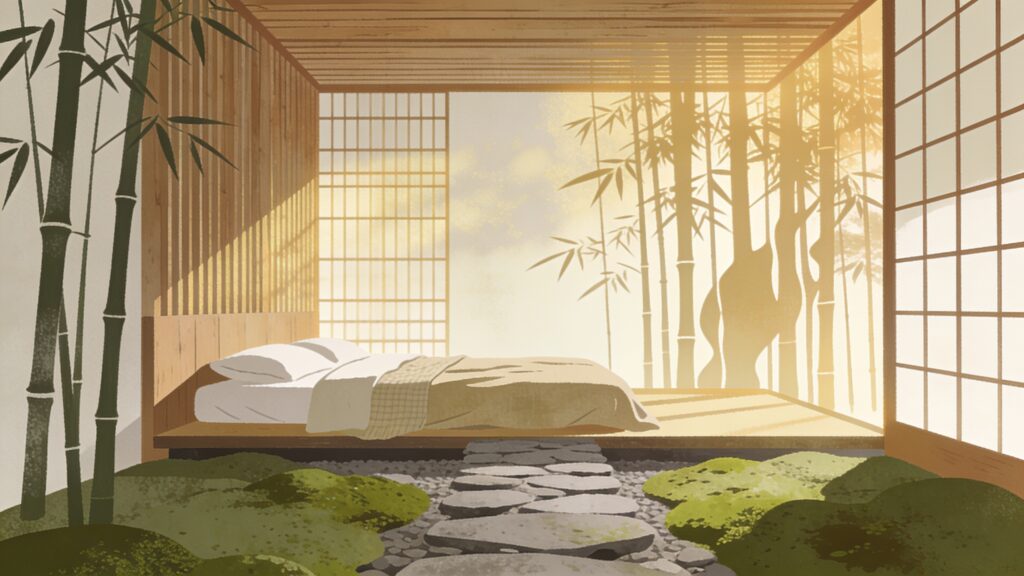
Natural light matters just as much. Shoji screens or simple linen curtains let daylight filter in softly rather than flooding the room. Waking up to diffused morning light rather than a hard shaft through a gap in blackout curtains sets a calmer tone for the whole day.
Storage: The Real Secret to a Calm Room
Clutter is the enemy of every Japanese design principle, and it’s the piece most people skip. Traditional homes use the oshiire, a built-in closet where the futon and bedding get folded away every morning, keeping the room visually empty during the day.
You can replicate this discipline without a built-in closet. A simple wooden chest or a set of low storage drawers gives you a place to put things away rather than leave them out. The habit matters more than the furniture: put things back after use, every time, and the room stays calm by default.
Underbed storage works well with platform frames, but resist the urge to fill it to capacity. Half-empty storage is still storage; overstuffed storage is just clutter with a lid on it.
Bringing in Nature Without Overdoing It
Natural elements ground the room, but Japanese design uses them sparingly. One well-placed plant, like a single potted bamboo or a small bonsai, has more impact than five scattered succulents.
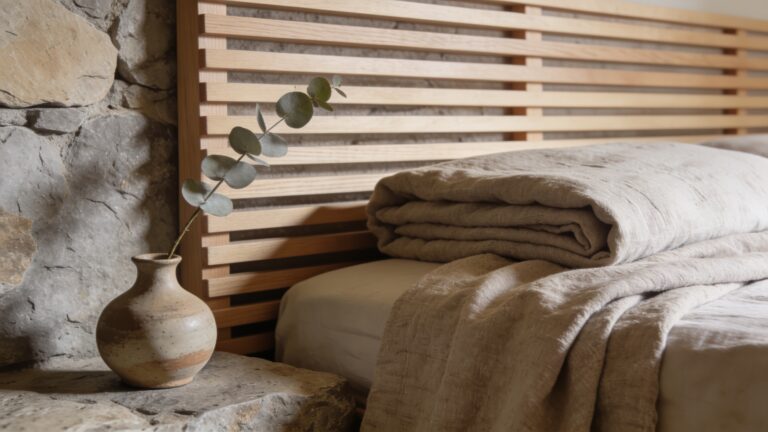
A small dish of river stones, a single branch in a simple vase, or a piece of driftwood on a shelf brings in the outdoors without cluttering the space. These objects change with the seasons if you let them, swapping a branch for a flowering stem in spring, for example, which keeps the room feeling alive rather than static.
Putting It All Together
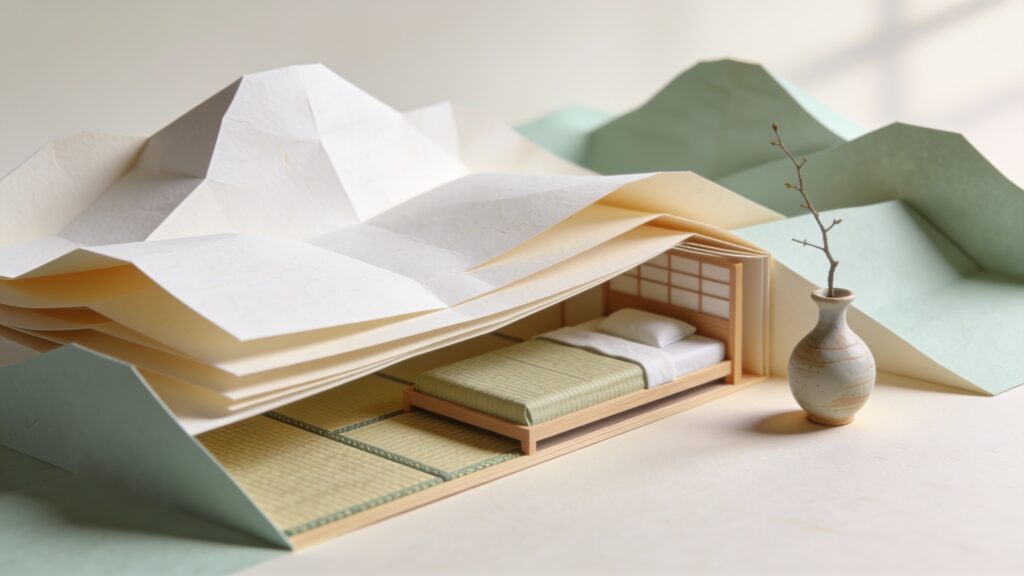
Start with the bed, since it anchors everything else. Lower the profile, choose a neutral cotton or linen cover, and clear the floor around it. Move to lighting next, swapping harsh overhead bulbs for warm, low sources. Then tackle storage so nothing sits out that doesn’t need to.
Resist buying a bunch of new decor at once. A Japanese-inspired bedroom comes together through subtraction as much as addition. Remove three things for every one thing you bring in, and you’ll notice the room breathing more easily within a week.
The payoff isn’t just aesthetic. A room with less to look at and fewer decisions to make each morning genuinely changes how you wind down at night and how you start your day. Pick one section of this article, the bed, the lighting, or the storage, and make that change this weekend. The rest will follow once you feel the difference.