How to Create a Modern Japanese-Style Room
 0
0
 0
0
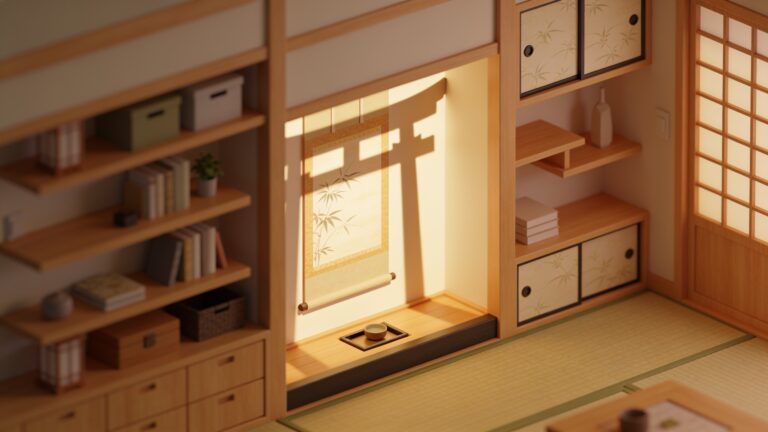
Most people picture tatami mats and paper screens when they hear “Japanese-style room.” That version has its place, but it demands a full renovation and a level of commitment most homes never get. The modern take is different. It borrows the discipline and calm of traditional Japanese design and applies it to a regular apartment or house, using furniture and materials you can actually buy this month.
I’ve helped friends redo bedrooms and living rooms around this idea for years, and the appeal never fades. It’s a style built on restraint rather than decoration, which makes it forgiving for small spaces and rental units where you can’t knock down walls or install a sunken floor.
Start With the Philosophy, Not the Shopping List
Before picking furniture, understand the three ideas that hold this style together. Skip this step and you’ll end up with a room that looks vaguely Asian but feels random.
Ma is the concept of negative space. Empty areas in a Japanese room are not “unfinished.” They’re deliberate. A wall with nothing on it gives your eye a place to rest.
Wabi-sabi is the appreciation of imperfection and age. A slightly uneven ceramic bowl or a wood grain with visible knots belongs in this style far more than anything glossy or symmetrical.
Shizen, or naturalness, means materials should look like what they are. Wood should look like wood, not a printed laminate pretending to be wood. Stone should feel like stone.
Keep these three ideas in your head as a filter. Every object you consider adding to the room should pass through them.
Choose a Restrained Color Palette
Color is where most modern Japanese-style rooms go wrong. People reach for bold reds and blacks because that’s the stereotype, but a real Japanese interior leans on muted, natural tones pulled straight from the landscape.
| Color | Where to Use It | Why It Works |
|---|---|---|
| Warm beige or sand | Walls, floor mats | Mimics tatami and unbleached linen |
| Charcoal gray | Accent furniture, frames | Grounds the room without feeling harsh |
| Soft moss green | Textiles, small plants | Brings in nature without clutter |
| Deep indigo | One accent piece only | Traditional dye color, use sparingly |
| Natural wood tones | Furniture, trim | The backbone of the whole aesthetic |
Stick to three or four colors total. If you’re staring at a wall of paint swatches, pick the one that looks the most washed out compared to the others. That’s usually the right choice.
Furniture That Sits Low and Says Little
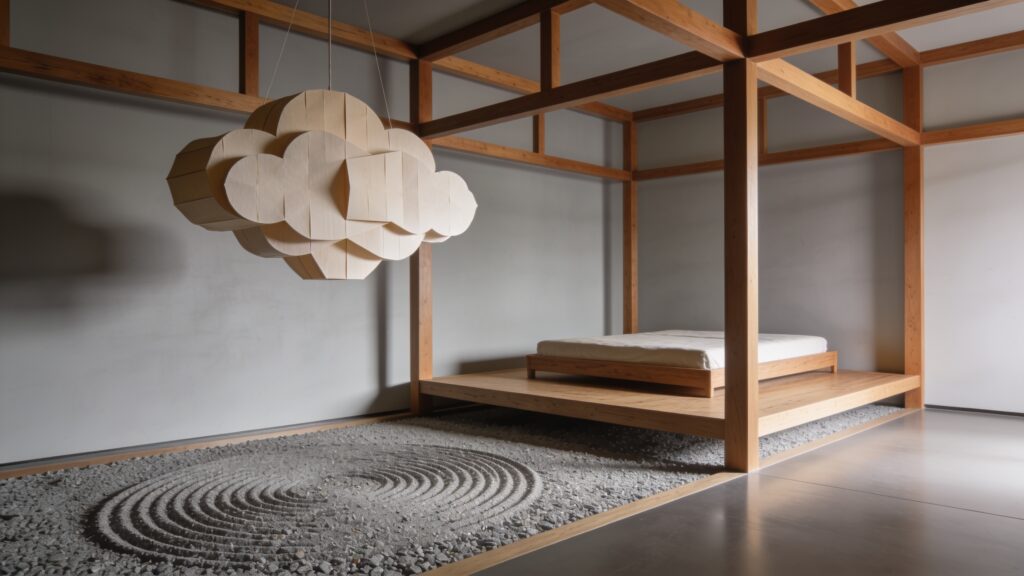
Japanese interiors keep furniture close to the floor. This isn’t just aesthetic, it changes how a room feels. Low furniture opens up the sightlines and makes even a small bedroom feel taller because there’s more visible wall space above the furniture line.
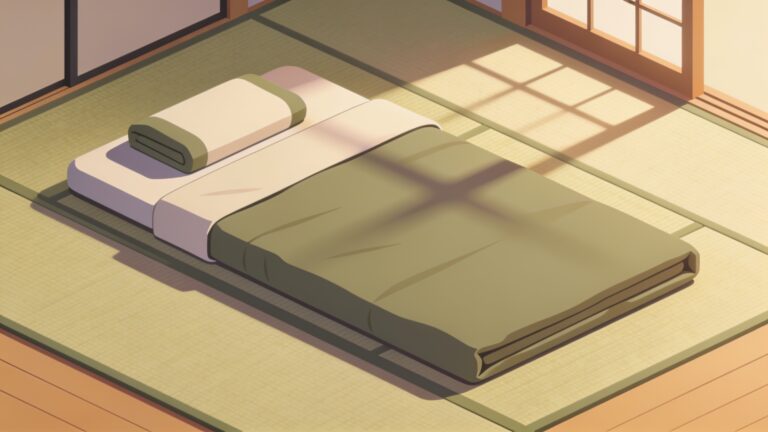
Look for a platform bed with a low frame instead of a tall bed with a headboard. A low wooden coffee table works better than a tall one with metal legs. If you sit on the floor at all, a simple zabuton cushion beats an armchair for a reading corner.
Furniture priorities, in order:
- A low platform bed or floor futon setup with a simple wood or bamboo frame
- A low table (chabudai style) for the living area
- Open wood shelving instead of closed cabinets, so a few chosen objects can breathe
- One statement chair, ideally wood and leather, kept away from the busiest wall
- Floor cushions or a tatami mat section for seating
Avoid anything with heavy carving, tufted upholstery, or shiny metal hardware. Those details fight against the quiet look you’re building.
Materials and Textures That Do the Heavy Lifting
Because the color palette is so restrained, texture carries a lot of the visual interest. This is where the room earns its personality.
Wood, Paper, and Natural Fiber
Unfinished or lightly stained wood should show up in at least two or three places, the bed frame, the shelving, a window frame if you can swap it. Paper matters too. Shoji-style screens, even a single decorative panel used as a room divider, add texture and soften light in a way curtains cannot.
Natural fiber rugs, like jute or seagrass, do the job tatami traditionally handled. They’re easier to source and clean than actual tatami mats, and they hold up fine in a modern apartment.
Stone and Ceramic Accents
A single stone element, a small tray, a set of unglazed ceramic vases, or a simple stone coaster set adds the grounding weight this style needs. Ceramics with visible glaze drips or asymmetric shapes fit the wabi-sabi idea better than a perfectly matched set from a big box store.
Lighting Sets the Mood More Than Anything Else
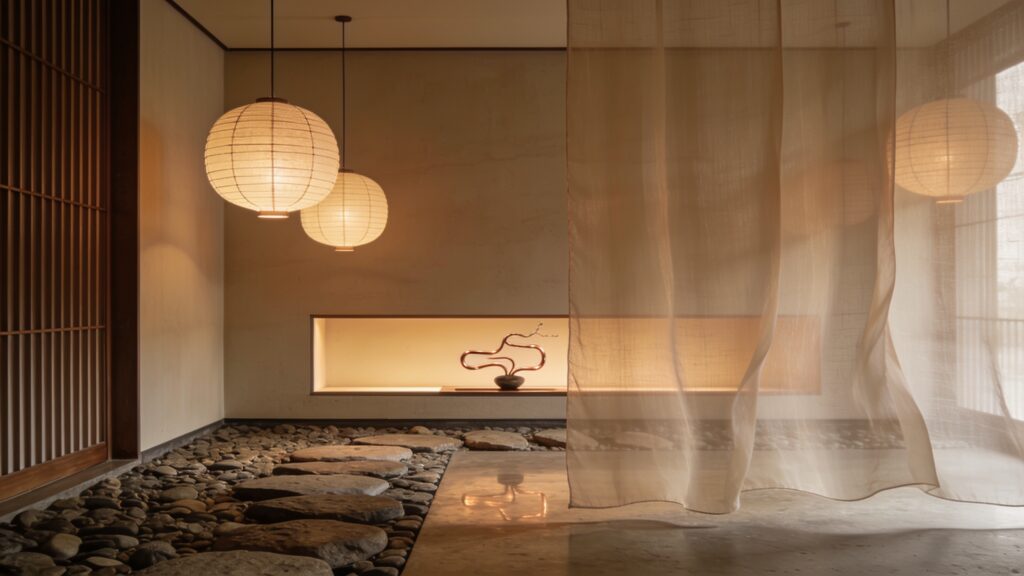
Harsh overhead lighting kills this style instantly. Japanese interiors favor diffused, low, warm light sources over bright ceiling fixtures.
Paper lanterns, whether hanging or floor-standing, are the easiest way to hit this note. A pair of low table lamps with rice paper or linen shades gives you soft pools of light instead of one flat wash across the room. If you have dimmable bulbs already installed, set them to warm white around 2700K rather than daylight white. That single adjustment changes the entire feel of a room without spending a dollar on new fixtures.
Bring in a Small, Deliberate Plant Selection
Plants connect the room to the outdoors, which is central to this whole aesthetic. The trick is restraint again. One or two well-placed plants beat a windowsill crowded with a dozen pots.
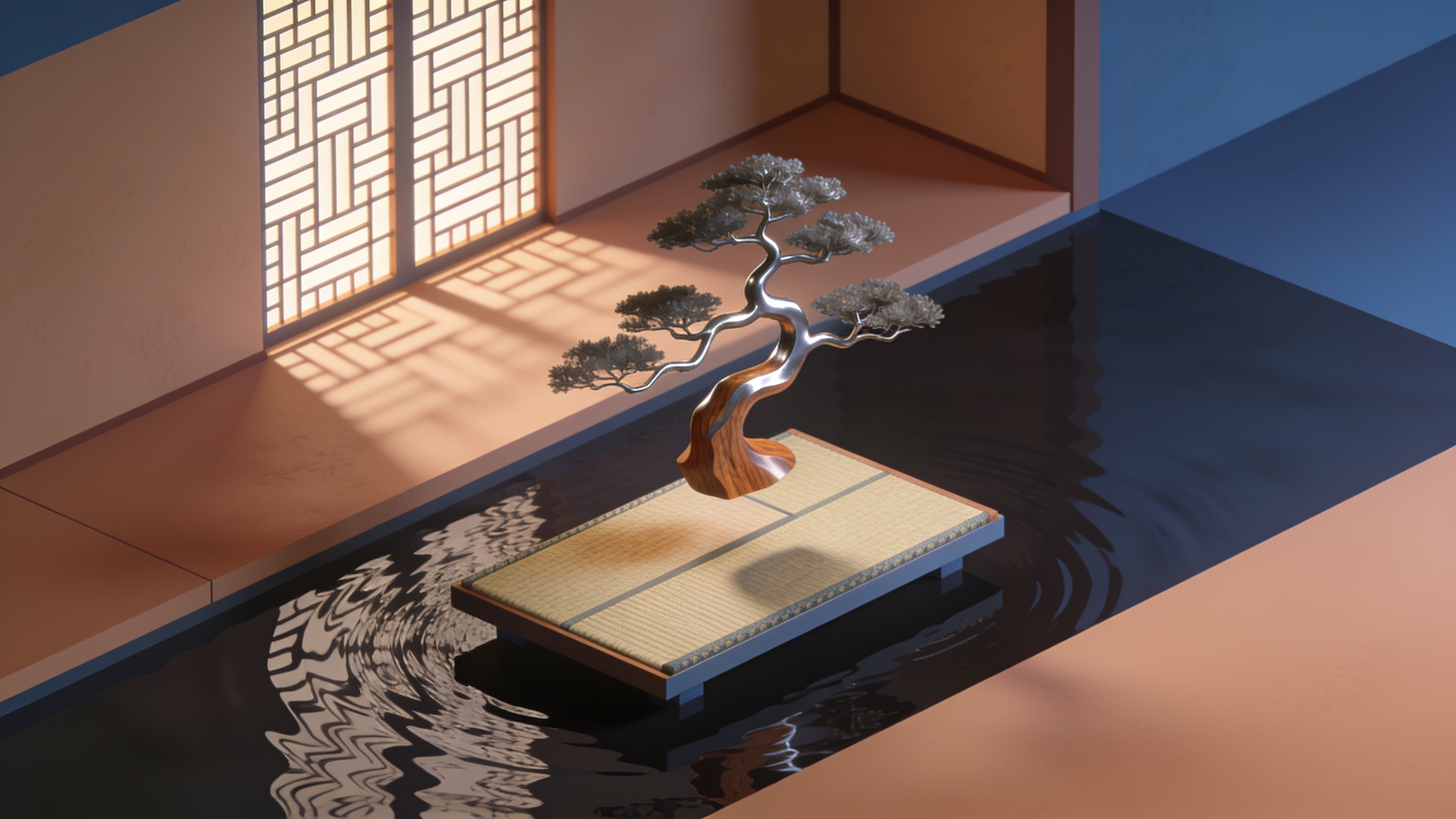
Bamboo, bonsai, and simple potted ferns fit naturally. A single branch of cherry blossom or plum blossom in a tall, narrow vase during spring months adds a seasonal touch without permanent commitment. Skip anything with loud flowers or busy variegated leaves. The plant should feel like a quiet accent, not a centerpiece competing with the furniture.
Declutter Like You Mean It
This style collapses the moment clutter creeps in. Before you buy a single new item, go through the room and remove anything that doesn’t serve a clear purpose or hold real meaning to you. Storage should be hidden behind simple wood panels or woven baskets, never left visible in open piles.
Rotate decorative objects seasonally instead of displaying everything at once. A shelf with one ceramic bowl and a single branch says more than a shelf crowded with souvenirs and photo frames.
Key Takeaways
A modern Japanese-style room comes down to a few consistent moves: a muted natural palette, low and simple furniture, honest materials like wood and paper, soft warm lighting, and a serious commitment to editing down what stays in the room. None of it requires a full renovation or a big budget. It requires patience and a willingness to leave space empty.
Start with one room, even one corner of a room, and apply these principles before expanding further. Once you feel how much calmer a decluttered, warmly lit space feels compared to a typical cluttered room, you won’t want to go back.