The Art Of Japanese Bedroom Design – 33 Ideas You Can Not Ignore
 0
0
 0
0
I’ve redesigned a lot of bedrooms over the years, and the ones that hold up best over time share a common thread: restraint. Japanese bedroom design built its reputation on exactly that principle. It strips away clutter, prioritizes natural materials, and treats the bedroom as a place for actual rest rather than a showroom for décor trends. If you’re tired of a bedroom that looks busy and feels stressful, this style gives you a proven blueprint.
Below I’ve broken down 33 ideas across the categories that matter most: furniture, materials, color, lighting, layout, and small details. Pick the ones that fit your space. You don’t need all 33 to get the effect right, you need the right combination.
Start With The Foundation: Furniture And Layout
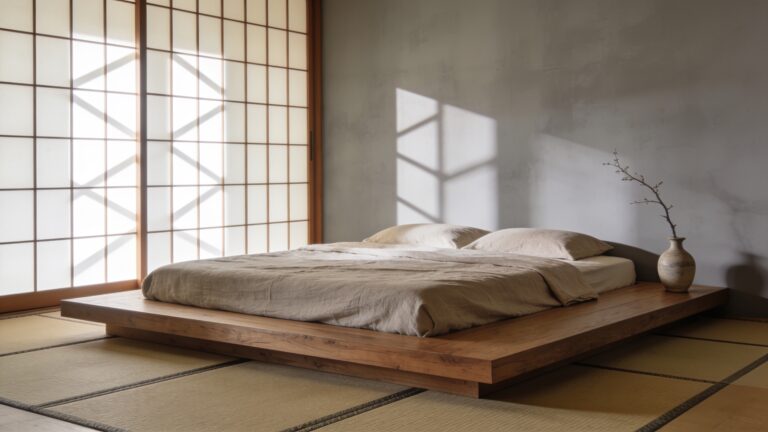
Japanese bedrooms build around low furniture and open floor space. The visual weight stays close to the ground, which makes even small rooms feel taller and calmer.
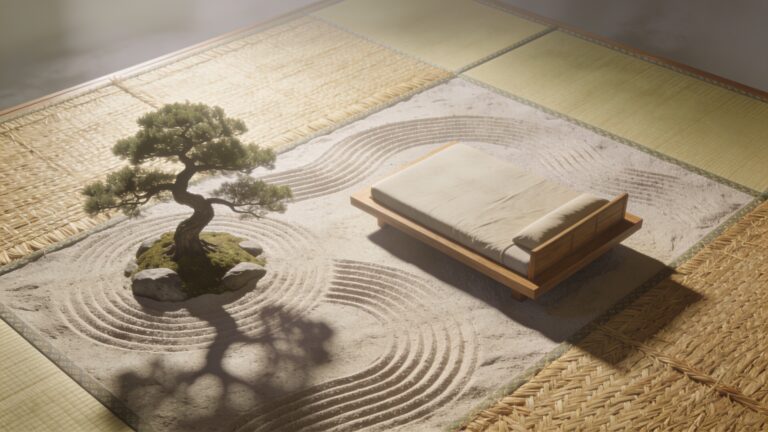
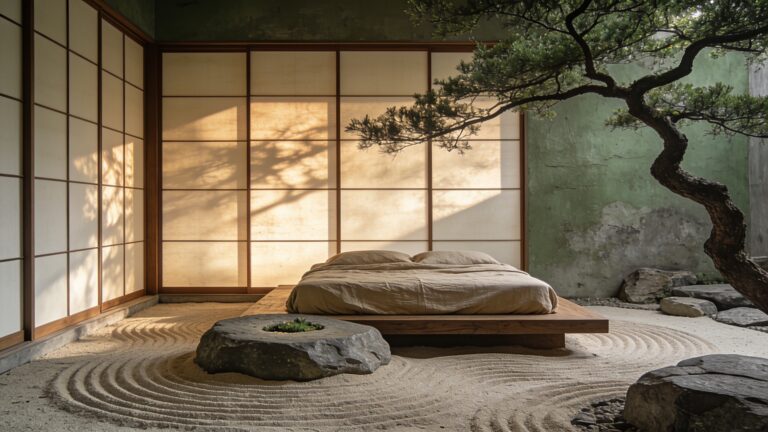
- Use a low platform bed instead of a tall frame with a box spring.
- Consider a traditional futon on a tatami mat if you want an authentic, floor-level sleep setup.
- Choose a bed frame in solid wood, ideally with a matte or natural finish rather than glossy lacquer.
- Skip the headboard, or choose one that’s barely raised above the mattress line.
- Keep nightstands low and simple, matching the height of the bed frame.
- Add a shoji screen to divide a room or hide a closet without blocking light.
- Use built-in or sliding-door closets to eliminate bulky wardrobes.
- Choose a low dresser with clean lines instead of an ornate chest of drawers.
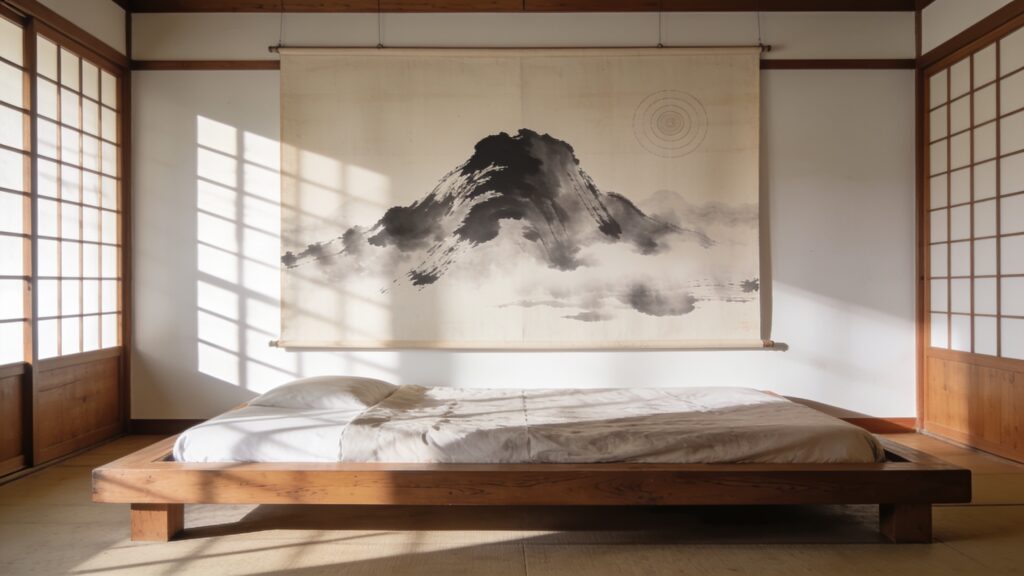
- Leave at least one wall visually empty to give the eye a place to rest.
- Arrange furniture so pathways stay straight and unobstructed, following the principles of natural flow rather than forcing symmetry.
I’ve noticed that clients who switch to a platform bed alone, without touching anything else in the room, already report the space feels more grounded. Furniture height changes the whole energy of a bedroom more than people expect.
Material Choices That Define The Look
Japanese design leans on natural, breathable, tactile materials. Synthetic finishes and high-gloss surfaces work against the calm this style aims for.
- Install tatami mat flooring, or use a large tatami-style area rug if full flooring isn’t practical.
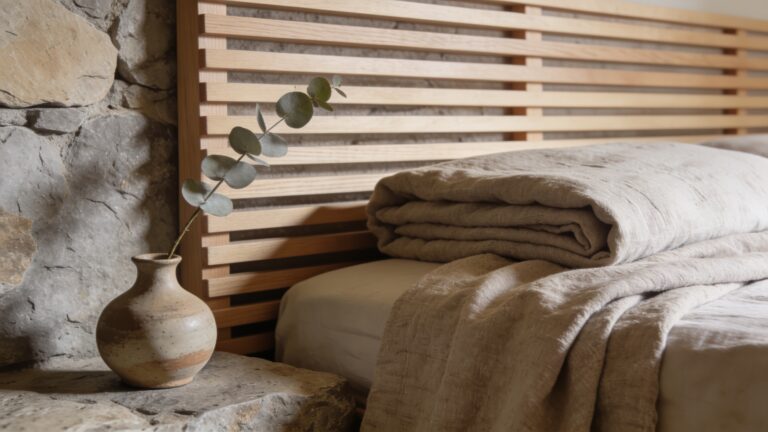
- Choose bedding in linen or cotton rather than synthetic blends.
- Add a wood-slat room divider for texture without visual heaviness.
- Use paper lantern shades (washi paper) for a soft, diffused glow.
- Incorporate bamboo accents, whether in blinds, small furniture, or wall art.
- Choose unfinished or lightly stained wood over painted or veneered pieces.
- Add a woven grass or rush seat cushion (zabuton) near a window for a reading spot.
- Use stone or ceramic elements sparingly, such as a small tray on a nightstand.
- Pick wool or cotton area rugs with a flat weave instead of thick shag textures.
- Select curtains in a raw or slightly textured fabric rather than heavy velvet or shiny polyester.
Here’s a quick reference for matching materials to the right part of the room:
| Room Element | Traditional Material | Modern Substitute |
|---|---|---|
| Flooring | Tatami mat | Tatami-style area rug |
| Bed frame | Solid cedar or pine | Engineered wood with matte finish |
| Window covering | Shoji paper screen | Linen roller shade |
| Lighting shade | Washi paper lantern | Frosted glass or paper-style LED fixture |
| Seating | Zabuton cushion | Low floor cushion with cotton cover |

Color Palette And Lighting
Color in a Japanese bedroom stays quiet on purpose. Loud colors compete for attention, and that’s the opposite of what a bedroom should do.
- Base the room in neutral tones: beige, off-white, soft gray, and warm taupe.
- Add depth with natural wood tones rather than painted accent walls.
- Bring in muted greens or blues in small doses, like a single cushion or a folded throw.
- Avoid pure white walls, which read as clinical. Choose warmer off-whites instead.
- Use black sparingly, as a frame, a lamp base, or thin furniture legs, to add contrast without overwhelming the palette.
- Install warm-toned lighting (2700K to 3000K) rather than cool white bulbs.
- Place a floor lamp with a paper or fabric shade in a corner for ambient light that doesn’t glare.
- Use dimmable lighting so the room can shift from bright and functional to soft and restful.
I always tell clients that lighting temperature matters more than fixture style. A beautifully designed room under a cool 5000K bulb still feels like an office. Warm light does half the work of making a space feel Japanese-inspired.
Small Details That Complete The Room
The finishing touches separate a room that looks the part from one that actually lives the part.
- Add a single ikebana-style flower arrangement rather than a full bouquet.
- Display one piece of wall art, such as a minimalist ink painting or calligraphy scroll, instead of a gallery wall.
- Keep surfaces at least 70% clear of objects at any given time.
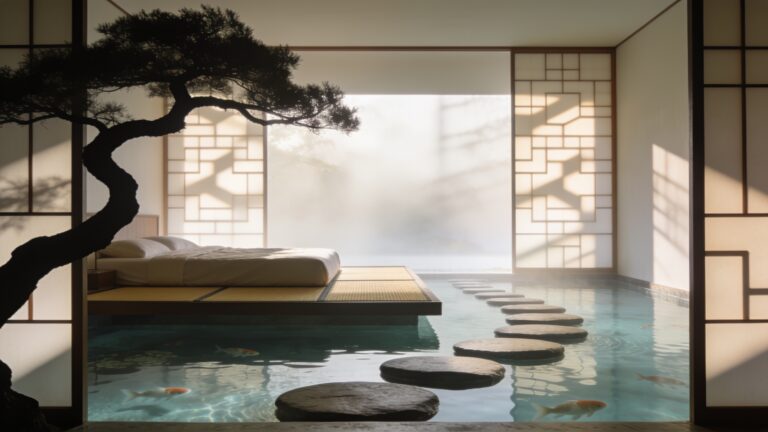
- Introduce a small indoor plant, like a bonsai or a bamboo stalk, for a living element.
- Store everything not in daily use out of sight, using drawers or closed cabinets rather than open shelving.
These details work because they follow a rule of restraint: one focal point per surface, not five. A single flower arrangement on a low table has more presence than a cluttered shelf ever will.
Bringing It All Together
A few practical notes if you’re planning the transformation:
- Start with furniture height and layout before touching color or accessories, since it’s the foundation everything else builds on.
- Change lighting temperature early. It’s the cheapest fix with the biggest visual payoff.
- Introduce natural materials gradually if budget is tight. A tatami rug and a linen bedding set alone shift the feel dramatically.
- Resist the urge to decorate every surface. Empty space is a design choice, not a gap to fill.
Japanese bedroom design succeeds because it treats the bedroom as a functional retreat rather than a display case. Lower furniture, natural materials, warm and dim lighting, a quiet color palette, and a strict edit on clutter all work together toward one goal: a room built for actual rest.
Pick five or six ideas from this list that suit your current space and budget, and start there. You’ll likely find that the room feels calmer after just a handful of changes, long before you’ve touched all 33.